A used MRSI-605 should be evaluated as a complete legacy production system rather than as a mechanical die bonder alone. Its practical value may depend as much on the control computer, hard drive, software, recipes and application-specific tooling as on the visible machine frame.
Listings often provide only a model name, year, photographs and a general condition label. That information does not establish whether the unit is an MRSI-605 or MRSI-605 AP, whether its control environment remains recoverable or whether the installed modules match the intended process.
Historical documentation explains what the platform or a specialized configuration once supported. Only the actual machine record, recoverable digital environment, installed hardware and functional evidence show what an offered unit can currently perform.
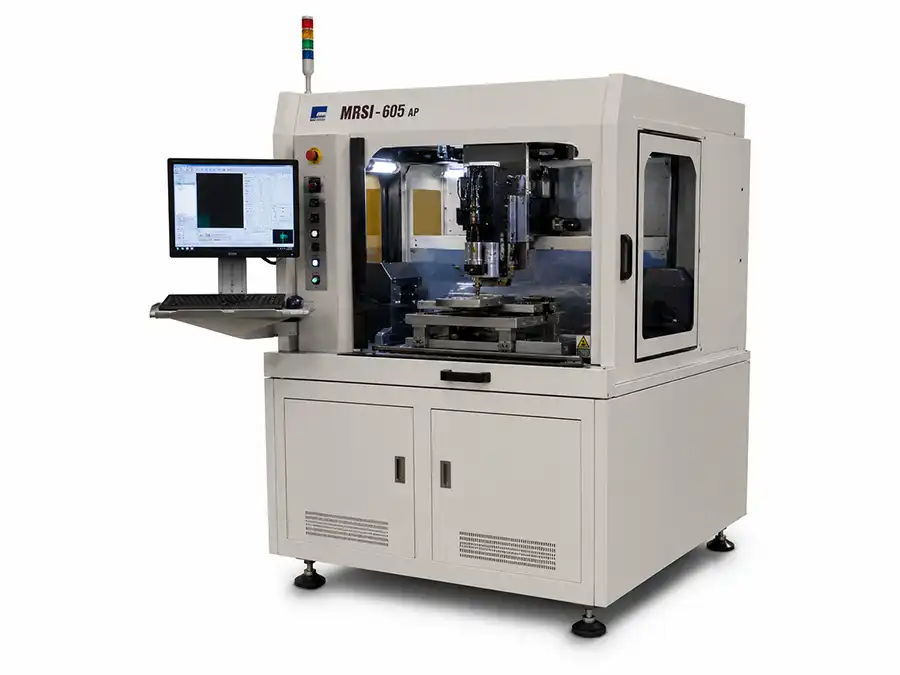
Confirm the Machine Identity and Previous Process
Begin by establishing exactly which machine is being evaluated. Marketplace listings may shorten the name to Newport MRSI 605 even when the original designation, revision or configuration is unclear. The nameplate and original records should take priority over the listing title.
Request full-machine photographs, a legible nameplate image and views of the control cabinet. The available record should identify the manufacturer, exact model, serial number, manufacturing year, electrical information, current location and known operating status.
Previous application is equally important. Epoxy die attach directs attention toward dispensing equipment and material handling. Eutectic production may involve heated stages, scrub functions and gas hardware. Flip-chip work can depend on orientation functions, optics, tooling and software that may not exist on another unit.
A replacement for an established MRSI-605 process may benefit from existing recipes, fixtures and operator knowledge. Using the same legacy platform for a new product usually involves greater tooling, development and revalidation risk.
Treat Software Recovery as an Early Purchase Gate
A mechanically complete MRSI-605 may have limited commercial value when its control environment cannot be accessed or preserved. On a legacy system, the industrial computer and storage media can contain machine definitions, calibration data, process programs and module settings that are difficult to recreate.
Confirm whether the installed computer is original or a replacement, whether it boots consistently and whether communication with the motion, vision and process hardware remains stable. One successful startup does not show how the system will behave during repeated use, dismantling or shipment.
The hard drive may contain the operating system, machine software, tool definitions, turret positions, recipes, vision programs, calibration files and product databases. Determine whether the original drive remains installed and whether a verified disk image or other recoverable backup exists.
Software review should cover the version, login credentials, passwords, licenses and any hardware keys used by the system. Authorized users should be able to access the configuration areas needed to inspect the modules claimed by the seller.
Available machine data may include product recipes, vision references, tool assignments, calibration databases and restoration records. Old programs do not establish compatibility with the buyer’s product, but they can document the former process and reduce recovery work in a replacement application.
Software presence also does not establish license transferability or current manufacturer support. A clean machine with an unstable computer and no backup may carry more commissioning risk than an older-looking unit with recoverable software, documented tooling and a known production role.
Verify the Installed Tooling and Process Configuration
Once the control environment appears recoverable, convert the seller’s description into a physical and digital configuration record. The objective is to determine whether the machine resembles the process for which it is being considered.
The tool turret should be photographed clearly, including usable positions, installed bond heads and missing or damaged interfaces. Pickup collets, nozzles, stamping tools, heated tools and holders should be identified where possible.
A six-position turret has little practical value when the tools are missing, poorly documented or unavailable in software. Original tools may also have been designed for the former product, so tool count alone does not establish usefulness for a new assembly.
The work area may include stages, sector plates, fixtures, boats, trays and substrate supports. Material-handling evidence should identify any waffle-pack, Gel-Pak, wafer or feeder-related hardware together with the corresponding stages and software.
Claimed process functions may include dispensing, heated stages, eutectic scrub, controlled-gas hardware, flip-chip handling, cameras, optics and specialized lighting. Each claim should be connected to photographs, software recognition, module records and an operating demonstration.
Test the Systems That Determine Functional Condition
Cosmetic completeness does not show whether the machine, computer and process modules operate together. Inspection should therefore move from documentation into controlled functional testing.
Startup and initialization should complete without unresolved communication failures. Repeated axis homing and movement provide initial evidence of controller and motion-system response, although successful homing does not certify placement accuracy.
The turret should index correctly, and tool recognition, pickup or return should be demonstrated where supported. Work stages and material handlers should complete the movements required by the agreed test sequence.
Vision review should cover image quality, lighting control and recognition behavior. A live image only confirms that a video signal exists; recognition of a relevant component, fiducial or feature provides stronger evidence.
Force-control response should be shown when controlled contact matters to the intended application. Heating, dispensing, scrub, gas or flip-chip functions should be demonstrated only when included in the offered configuration. Untested functions and missing utilities or accessories should be recorded explicitly.
Distinguish Power-On, Dry Cycle and Process Evidence
Different demonstrations answer different purchasing questions. A power-on video confirms limited electrical and control response. A dry cycle adds sequence and motion evidence. A representative process test combines relevant tools, components or substitutes with agreed acceptance criteria.
| Poziom dowodów | Co może pokazać | Czego to nie dowodzi |
|---|---|---|
| Power-on and software boot | Electrical response, computer startup, machine communication and basic access | Complete software, stable motion, usable tooling or process capability |
| Axis initialization | Homing, selected movement and basic controller response | Placement accuracy, calibration quality or production stability |
| Cykl suszenia | Program sequence, motion and limited coordination between installed systems | Material behavior, heating stability, bond formation or product suitability |
| Test specyficzny dla modułu | Operation of a turret, vision function, dispenser, heated stage or other claimed module | Complete process integration or compatibility with the buyer’s application |
| Przedstawiciele firmy pick-and-place | Recognition, pickup, alignment, movement and placement using suitable samples and tools | Bond quality when the joining process is not included |
| Process-relevant acceptance test | Agreed process functions using relevant hardware, materials and measurable criteria | Performance outside the defined scope or long-term production capability |
Power-on remains a low evidence level when software access is limited, modules are not recognized or the storage system is unstable. A dry cycle shows more of the machine sequence but cannot demonstrate epoxy behavior, thermal stability or bond formation.
Module-specific testing should correspond directly to the seller’s claims. A dispenser should deliver material under an agreed condition, a heated stage should show accessible control and response, and a turret should index and recognize assigned tools.
A representative test becomes more useful when the software is recoverable and suitable tooling and samples are available. It does not always need to use the buyer’s final product, but it should address the main reason the machine is being considered.
Define the Acceptance Test Around the Intended Use
The acceptance-test scope should be agreed before travel, deposit payment, final quotation approval, dismantling or shipping preparation. Otherwise, the buyer may expect a process demonstration while the seller has prepared only a startup or motion sequence.
A practical test can confirm machine identity, included configuration, software access, backup status, axis and stage movement, turret operation, tool recognition, camera performance, alignment behavior and force-control response.
Where relevant, the scope may also cover material handlers, dispensing, heating, scrub, gas control, flip-chip functions and representative placement with agreed samples. Untested modules and unavailable accessories should be listed with the completed demonstrations.
Document review is the least expensive starting point. Recorded evidence adds operating context, a live remote session allows specific screens or movements to be requested, and an on-site inspection provides better access to condition, tooling and records. A representative acceptance test offers the strongest process evidence when suitable materials and tools are available.
Acceptance criteria should follow the intended use and available measurement method rather than a universal accuracy or bond-quality figure taken from historical platform material.
Evaluate Legacy Replacement Fit and Revalidation Risk
A used MRSI-605 may have its strongest business case as a replacement or capacity addition for an established legacy process. Compatible fixtures, tools, recipes, acceptance criteria and operator experience can reduce the amount of new development required.
That advantage still depends on similarity between the machines. Revision differences, changed tool interfaces, missing programs or different process modules may require substantial revalidation.
A new-product project carries greater uncertainty. The buyer may need to design tooling, rebuild material handling, recover software knowledge and qualify the bonding process without dependable factory support or readily available replacement parts.
The relevant question is not simply whether the machine turns on. It is whether the recoverable control environment, installed hardware and available tooling align with the intended production context.
Confirm Refurbishment and Final Delivery Scope
Condition terms should be separated carefully. Used may refer only to previous ownership. Tested should identify the functions demonstrated. Repaired should state the fault and completed work. Refurbished should be supported by a documented scope covering replaced parts, computer or storage work, calibration, software activity and final testing.
The delivery record should identify the main machine, control computer, hard drives, software media, license evidence, passwords, backups, turret, bond heads, collets, process tools, fixtures, stages, handlers and application-specific accessories.
Pumps, cables, gas-related components, manuals, calibration records and spare parts should also be listed where included. Removed, damaged and excluded items need equal visibility because a functionally demonstrated machine may still arrive incomplete for the buyer’s application.
Packing photographs and a signed inventory reduce post-shipment disputes. Installation, training, warranty, technical support and software transfer should appear only when confirmed in writing.
Decide Whether to Pause, Inspect, Test or Quote
Pause or stop the review when the exact identity remains unclear, the control computer is unstable, software access cannot be demonstrated, recovery risk is unacceptable or claimed modules cannot be documented.
Request more evidence when the machine appears relevant but photographs, software screens, tooling records or module demonstrations remain incomplete. Arrange inspection or acceptance testing when identity and recoverability are credible and the remaining risk requires live verification.
A qualified quotation becomes useful only after the machine identity, software recovery, installed configuration, missing items, test scope and delivery terms are sufficiently clear.
Aby przejrzeć konkretne used MRSI-605 AP equipment, contact the technical team by email or WhatsApp with the listing, nameplate, control-computer photographs, software screens, backup status, tooling record, previous application and intended acceptance-test scope.
Machine records, software screenshots, tooling images and process documents can be attached after the conversation is opened. Compatibility, recovery work, testing, refurbishment, price, warranty and delivery should follow review of the actual unit.
Frequently Asked Questions About a Used MRSI-605
What should be checked before buying a used MRSI-605?
Check the exact model identity, control-computer and software recoverability, installed tooling and process modules, functional evidence, acceptance-test scope and final delivery completeness.
Is MRSI-605 the same as MRSI-605 AP?
Not necessarily. Used listings may shorten the name, so the machine plate, serial number and original records should establish the exact designation.
Is a power-on video enough to evaluate an MRSI-605?
No. It may show computer boot and basic machine communication, but it does not establish software completeness, stable motion, usable tooling, calibration or process capability.
Why is the original computer or hard drive important?
It may contain machine software, configuration data, tool definitions, recipes, vision programs and calibration files needed to access and operate the installed hardware.
What tooling should be included with a used MRSI-605?
The required tooling depends on the product, but the delivery record should identify the turret, bond heads, collets, pickup and bonding tools, fixtures, stages and application-specific accessories.
Can a used MRSI-605 replace an existing production machine?
It may be suitable when the identity, revision, software, tooling, configuration and process evidence align with the existing line. Revalidation and commissioning risk still require review.
Wniosek: A used MRSI-605 is a complete legacy production system rather than merely a machine frame. Its value depends on the relationship between machine identity, recoverable software, original data, installed tooling, process hardware and functional evidence. Power-on and dry-cycle demonstrations provide limited assurance, while a defined acceptance test can address the risks that matter to the intended process. Legacy replacement may be more realistic than new-process development, but historical specifications do not establish current capability. The next commercial step should follow the quality of the machine-specific evidence.