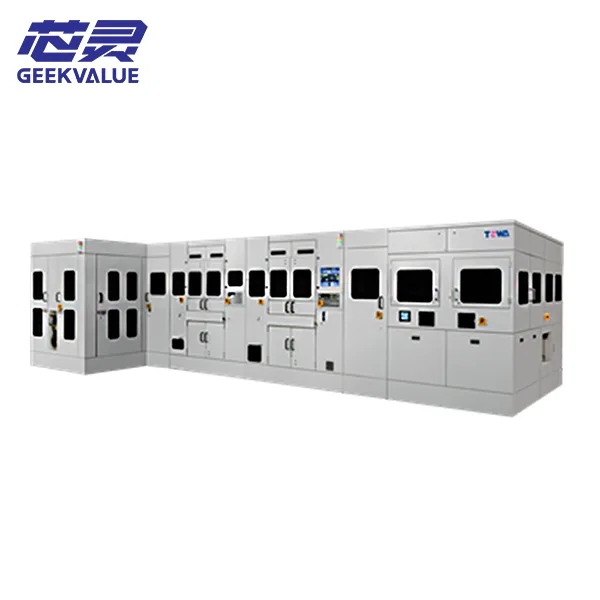
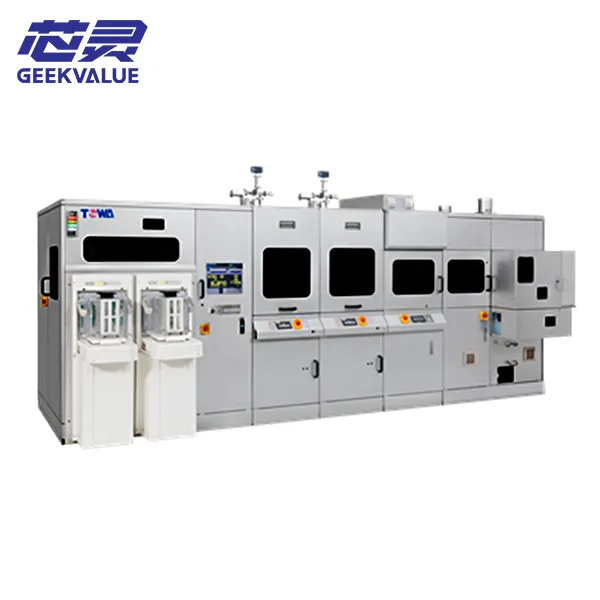
The TOWA Y1E4120 is a modular transfer molding system used for semiconductor package encapsulation on compatible substrates and leadframes. Its press modules can be increased or reduced for different production requirements, while the actual mold, tooling, magazine arrangement and handling configuration depend on the specific pre-owned machine available.
For an initial inquiry, send your current molding-machine model, a clear substrate, leadframe or product photo, and a short description of the required process. We can review the basic requirement first and continue with detailed mold and configuration checks only when necessary.
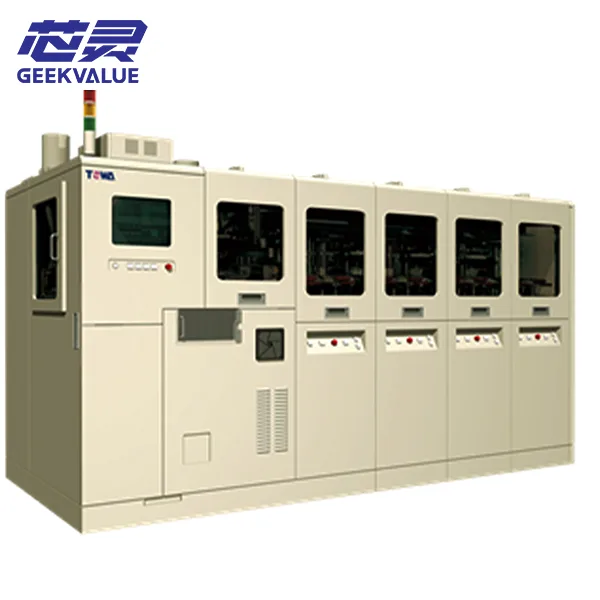
TOWA Y1E4120 Machine Information
| Manufacturer | TOWA |
|---|---|
| Model | Y1E4120 |
| Equipment Type | Modular semiconductor transfer molding system |
| Workpiece Type | Substrate and leadframe |
| Workpiece Length | 100–260 mm according to the manufacturer’s model specification |
| Workpiece Width | 15–78 mm according to the manufacturer’s model specification |
| Molding Compound Diameter | Ø13, 14, 16, 18 or 20 mm |
| Molding Compound Length | 11.7–35.0 mm |
| Clamp Capacity | 392–1,176 kN / 40–120 tf, depending on configuration |
| Press Configuration | One to four press modules according to the model configuration |
| Standard Machine Time | Approximately 20 seconds; actual cycle time depends on the product, mold and process |
| Condition | Pre-owned semiconductor packaging equipment |
| Actual Configuration | Confirmed according to the specific machine available |
| Delivery Scope | Based on the quotation and confirmed equipment list |
| Shipping | Export packing and worldwide delivery |
Product and Mold Compatibility
The official workpiece range does not automatically confirm that the available Y1E4120 can mold a particular semiconductor package. Compatibility also depends on the substrate or leadframe layout, package design, installed mold, molding compound and required finished result.
Only basic information is needed for the first discussion:
- Your current molding-machine model if the Y1E4120 will replace existing equipment
- A clear photo of the substrate, leadframe or molded package
- A photo of the current mold, chase or tooling where available
- A short description of the molding requirement or current production problem
Detailed drawings, mold data, compound information and process settings can be discussed later when the available machine appears relevant to the project.
Y-Series Tooling and Product Conversion
The Y1E4120 can use compatible Y-Series kits, chases and chase holders for applicable 60- and 120-ton configurations. This may be useful when replacing an existing TOWA Y-Series machine or continuing production with established tooling.
Compatibility must still be checked using the exact kit, chase, chase holder, mold size and press configuration. A conversion kit or mold supplied with a used machine may have been prepared for one particular product and should not be assumed to fit another substrate or leadframe.
Available Y1E4120 Configuration and Delivery Scope
The TOWA Y1E4120 was designed as a modular platform and may be equipped with one to four press modules, different magazine arrangements, molds, chases and material-handling components. Individual pre-owned machines can therefore differ considerably in production setup and included tooling. Before purchase, the available unit should be reviewed to confirm how it is equipped and whether its actual configuration is suitable for the intended molding process. The final delivery scope is based only on the quotation and confirmed equipment list; production molds, conversion kits, magazines, chase holders, computers and external utility equipment are included only when specifically stated.
Receiving, Startup and Initial Molding Trial
The machine should be inspected and tested in stages before valuable substrates, leadframes or molding compound are introduced.
- Inspect the packing, machine cabinets, press modules, control panel, safety guards and visible transfer mechanisms.
- Photograph any impact marks, loose components, damaged cables or displaced assemblies before moving the equipment.
- Compare the delivered machine, molds, chases, conversion kits and accessories with the confirmed delivery list.
- Check that the molds, press components and material-handling mechanisms remain secured after transportation.
- Confirm the electrical supply, grounding, compressed air, exhaust and other facility requirements of the actual machine.
- Start the controller and record all alarm messages before resetting the system or changing process parameters.
- Confirm that each installed press and handling module initializes and returns to its correct starting position.
- Run a dry cycle without production substrates, leadframes or molding compound.
- Observe magazine loading, workpiece transfer, press movement, sensors and output handling throughout the cycle.
- After the dry cycle is stable, use a suitable mold and non-production workpieces for an initial molding trial.
Several repeated cycles should be completed before production readiness is evaluated. Stop testing if the press moves abnormally, material transfer is unstable, mechanical interference occurs or the same alarm repeatedly returns.
Molding Results, Alarms and Parts Support
Incomplete fill, excessive flash, voids, package cracks, leadframe damage or inconsistent molding may involve the molding compound, mold condition, workpiece position, clamping, transfer pressure, temperature or machine settings.
Do not continue production if the mold does not open or close correctly, workpieces cannot be transferred safely, products cannot be unloaded normally or repeated alarms remain unresolved.
Record the alarm message, affected press module and process stage before resetting the machine. Photos of the substrate, leadframe, molded package, mold surface and machine screen, together with an operating video where available, can provide a practical starting point for review.
Our team can assist with initial fault analysis, mold and component identification, replacement-part matching and repair discussion. Related heaters, sensors, valves, motors, drivers, boards, cables, pneumatic parts and material-handling assemblies can also be checked where available.
Frequently Asked Questions
Can the TOWA Y1E4120 mold our semiconductor package?
This depends on the substrate or leadframe, package layout, molding compound, required result and mold installed on the available machine. Send product photos and basic process information for an initial review.
How many press modules are installed on the available machine?
The Y1E4120 supports configurations with one to four press modules. The exact number, condition and arrangement on the available used machine must be confirmed according to the specific unit.
Can we use our existing TOWA Y-Series tooling?
The model supports compatible Y-Series kits, chases and chase holders, but actual compatibility must be checked using the tooling model, mold size and press configuration.
Is a production mold or conversion kit included?
Only molds, chases and conversion kits specifically listed in the quotation or confirmed delivery scope are included.
Can you assist with press alarms or molding defects?
Yes. Send the machine model, alarm information, workpiece and mold photos, molded-product photos and an operating video where available. We can assist with initial fault review, parts matching and repair discussion.
Contact Us About the TOWA Y1E4120
Send your current machine model, substrate or leadframe photos and a short description of the molding requirement or equipment problem. We will review the basic information first and continue with the necessary press configuration, mold, conversion-kit, replacement-parts or repair details afterward.