Improve Surface Readiness
Prepare leadframes, substrates and package surfaces before die attach or wire bonding when contamination may affect process stability.
A plasma cleaner machine removes selected surface contamination and activates wafers, leadframes, substrates and packaged devices before critical assembly steps. Browse available vacuum, batch and automatic plasma cleaning systems for die attach, wire bonding, underfill, molding and wafer-level packaging.
Prepare leadframes, substrates and package surfaces before die attach or wire bonding when contamination may affect process stability.
Activate surfaces before underfill, adhesive dispense, molding or coating where surface energy influences material flow and adhesion.
Select the chamber and automation around the actual product format, throughput target and downstream production step.
Most customers begin searching for a plasma cleaner after a bonding, wetting or adhesion problem appears. The fastest way to narrow the equipment is to identify the product, the suspected surface condition and the next process.
Tell us whether the parts are wafers, strips, leadframes, substrates or packaged devices, and whether treatment is required before die attach, wire bonding, underfill, molding or coating.
Review plasma cleaning before die attach or wire bonding when pad, leadframe or substrate contamination may affect adhesion and process consistency.
Surface activation may help underfill, adhesive or coating spread more consistently when poor wetting is linked to surface energy or organic residue.
Evaluate plasma treatment before molding or encapsulation when adhesion between the package surface and protective material requires better preparation.
For wafer and panel processes, confirm device sensitivity, carrier method, uniformity and whether the required treatment is compatible with the actual plasma platform.
Browse the plasma cleaner Eachines currently listed in this category. Open each product page to review the available model, then confirm the actual chamber, plasma source, gas controls, vacuum pump, handling system, software and included accessories before ordering.
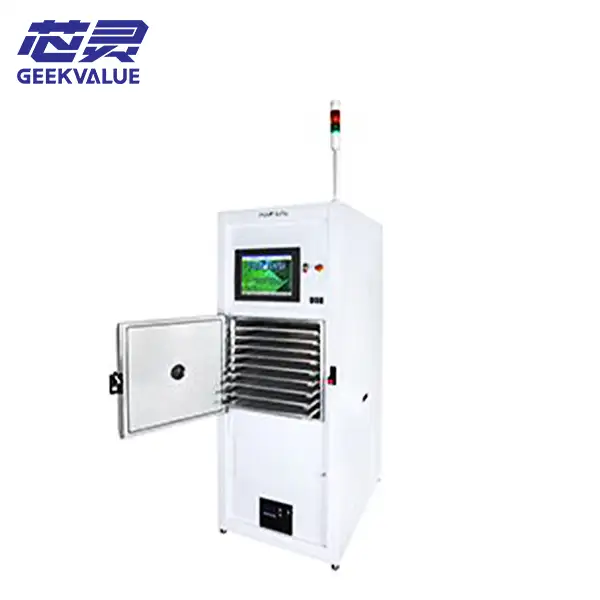
Pre-owned PVA TePla IoN 200 plasma cleaner for surface treatment and plasma cleaning applications. Ask about process mat...
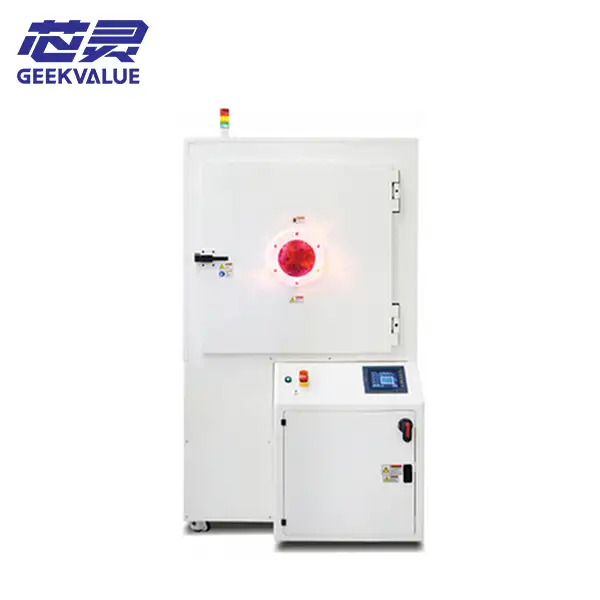
Pre-owned Nordson MARCH AP-600 plasma cleaning system. Ask about machine configuration, process matching, condition, par...
Pre-owned Nordson MARCH AP-300 plasma cleaning system. Ask about process suitability, machine condition, included equipm...
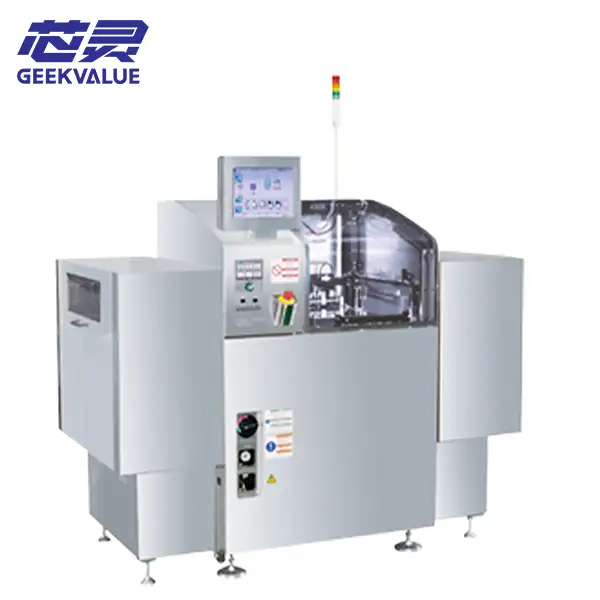
Pre-owned Panasonic PSX307 plasma cleaning system. Ask about machine condition, process matching, delivery scope, parts,...
The machine route should match the product carrier, production volume and required surface treatment. Equipment with similar plasma specifications may still be unsuitable if the chamber or handling system cannot support the actual product flow.
Batch vacuum systems support mixed products, process development and low-to-medium volume production using trays, racks, carriers, leadframes, packages or wafers.
Confirm: chamber volume, electrode layout, loading fixtures, plasma source, gas channels, pump and recipe control.
Automated strip and magazine systems are designed for repeatable semiconductor backend production where handling, recipe control and traceability are part of the line.
Confirm: strip dimensions, magazine type, transfer direction, cycle target, communication protocol and loader/unloader configuration.
Inline systems can treat substrates or electronic assemblies before coating, bonding or dispense processes without breaking the production flow.
Confirm: panel dimensions, conveyor height, treatment uniformity, line speed, product clearance and upstream/downstream interface.
Wafer-level systems require tighter control of wafer size, carrier method, edge protection, backside exposure, treatment uniformity and device sensitivity.
Confirm: wafer or panel size, carrier, load port or cassette, process uniformity, plasma mode and allowed ion or UV exposure.
The chamber and automation must fit the actual product. Plasma capability alone does not guarantee that a machine can handle the required strip, wafer, substrate or carrier.
IC, discrete, power and sensor packages.
Strip width, magazine type, pitch, electrode spacing, product clearance, transfer direction and cycle time.
WLP, advanced packaging and wafer surface preparation.
Wafer or panel size, carrier, edge protection, uniformity, backside exposure and device sensitivity.
Preparation before dispense, bonding or coating.
Panel dimensions, treatment area, conveyor interface, fixtures, line speed and downstream material process.
R&D, qualification and flexible production.
Rack design, sample holder, recipe flexibility, cross-contamination control, gas options and maintenance access.
You do not need a finished plasma recipe before asking for a machine. A useful review starts with the product, the next process and the result you need from surface treatment.
Share the information already available. We can then identify which chamber, gas route, plasma source, handling system and automation details still need confirmation.
Wafer, strip, leadframe, substrate, panel, carrier, magazine or packaged device, including dimensions and loading direction.
Selected residue removal, oxide reduction, surface activation, improved wetting or preparation before bonding, underfill, molding or coating.
Identify exposed metals, polymers, optical surfaces, MEMS structures or other materials that may limit ion, heat or UV exposure.
Batch quantity, cycle target, recipe storage, barcode, logging, SECS/GEM and inline communication requirements.
Available process gases, electrical supply, compressed air, cooling, vacuum exhaust, floor space and local safety requirements.
The same plasma cleaner model may have different chambers, RF generators, electrodes, gas manifolds, pumps, software and automation modules. A quotation should identify the machine that will actually be supplied.
Confirm the exact platform, manufacturing year, serial information and current location.
Identify chamber size, electrode layout, RF frequency and power configuration.
Confirm gas channels, flow controls, pump model, purge arrangement and exhaust route.
Review handling modules, recipe software, licenses, barcode, logging and factory interfaces.
Check electrode wear, chamber deposits, pump service history, seals, valves and refurbishment scope.
List included racks, boats, carriers, manuals, spares, transformers and installation requirements.
These questions help separate the equipment category, process route and actual configuration before a quotation is prepared.
It may help when selected organic contamination, oxide condition or low surface energy is affecting the process. The product material, contamination source and bonding method should be reviewed before selecting the equipment or recipe.
Batch systems load products into a chamber using trays, racks or carriers and are often selected for flexibility. Automatic systems add strip, magazine, wafer or conveyor handling for repeatable production and factory integration.
The gas depends on the contamination, surface material, desired reaction and product sensitivity. Machine compatibility also depends on the installed gas manifold, flow controllers, chamber materials, safety controls and exhaust system.
No. Plasma is effective for many organic residues and surface-activation tasks, but particles, ionic contamination and heavy deposits may still require a wet-cleaning or mechanical-cleaning process.
Check the model, chamber, RF generator, electrodes, gas controls, vacuum pump, loader, software, process history, chamber cleanliness, maintenance records, included fixtures and factory utility requirements.
Send the target product, dimensions, contamination or surface objective, next process, preferred automation, required gas route, production volume, equipment condition and destination country. A model number is helpful but not mandatory.
Send the product format, surface objective, next process, production volume, preferred equipment condition and destination. We will review the available plasma cleaner machines and the configuration points that still need confirmation.