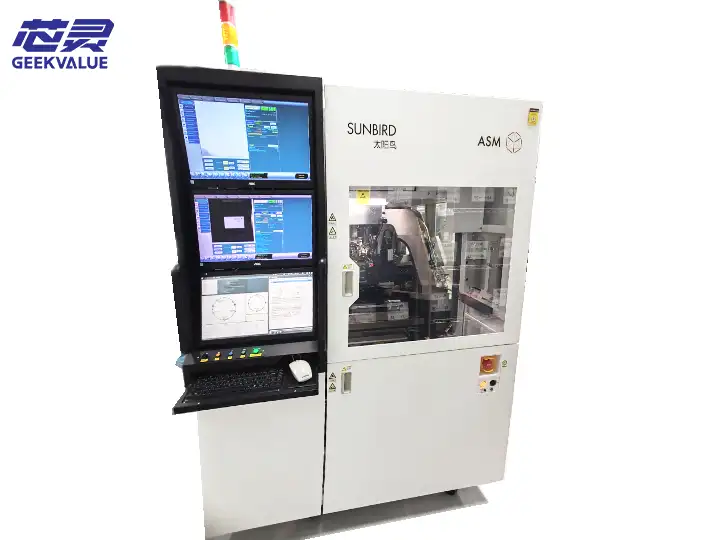
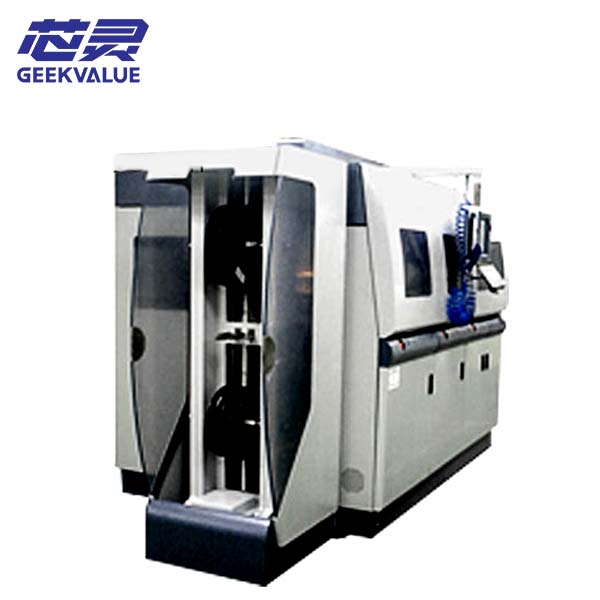
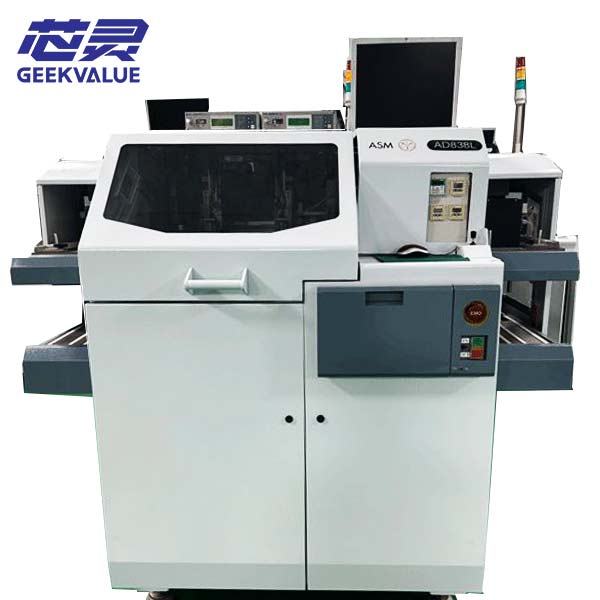
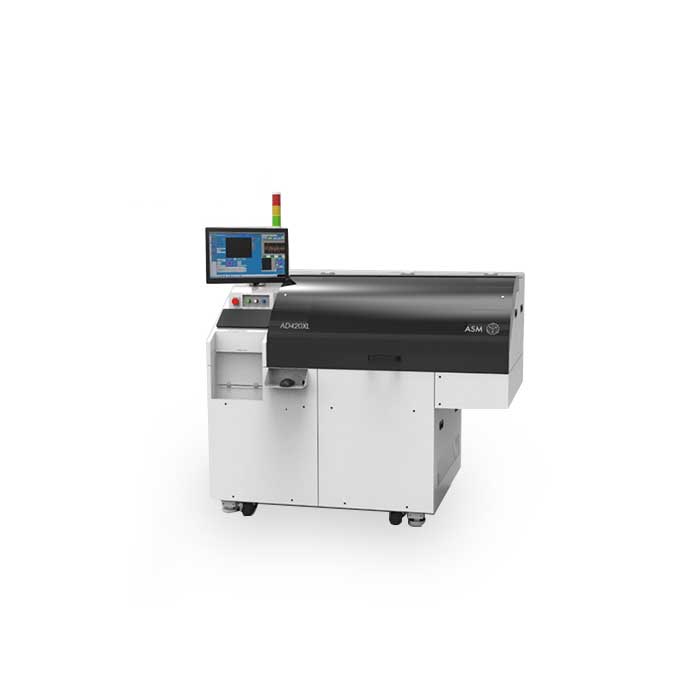
The ASMPT IDEALmold 3G is an automatic transfer molding system used for semiconductor package encapsulation. Different machines may have been configured with different press modules, molds, substrate-handling components and process functions, so the actual capability of a pre-owned unit must be confirmed from its installed equipment rather than from the model name alone.
For an initial inquiry, send your current molding-machine model, clear photos of the substrate or molded product and a short description of the required process. We can review the basic application first and request detailed mold or product information later when necessary.
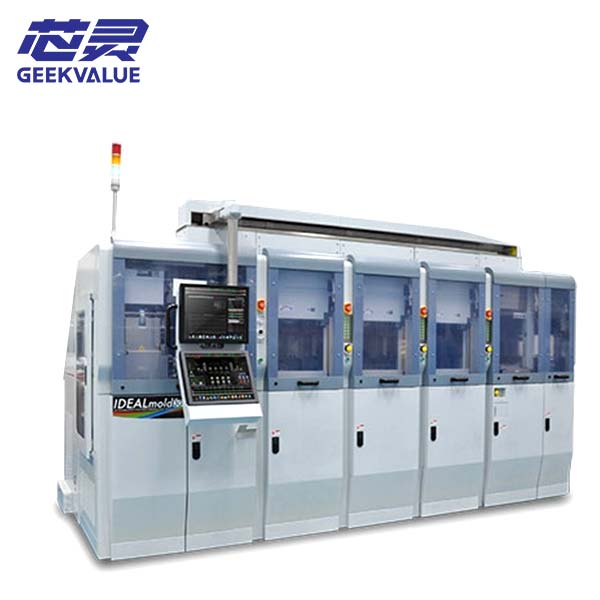
ASMPT IDEALmold 3G Machine Information
| Manufacturer | ASMPT |
|---|---|
| Model | IDEALmold 3G |
| Equipment Type | Automatic semiconductor transfer molding system |
| Primary Application | Semiconductor package encapsulation |
| Workpiece Compatibility | Determined by the substrate, package layout, installed mold and handling configuration |
| Molding Process | Transfer molding for compatible semiconductor packaging applications |
| Condition | Pre-owned semiconductor packaging equipment |
| Actual Configuration | Confirmed according to the specific machine available |
| Delivery Scope | Based on the quotation and confirmed equipment list |
| Support | Initial fault review, parts matching and repair discussion |
| Shipping | Export packing and worldwide delivery |
IDEALmold 3G in Semiconductor Packaging
The IDEALmold 3G combines molding presses with compatible substrate loading, transfer and output functions for semiconductor package encapsulation. The installed production setup may vary according to the products previously processed on the machine.
This means that two IDEALmold 3G systems may differ in press count, molds, tooling, handling mechanisms and other process-related components. Buyers should evaluate the available machine as a complete production configuration rather than assume that every unit has the same functions.
Product and Mold Compatibility
The IDEALmold 3G model name does not by itself confirm compatibility with a specific package. The available machine must match the substrate format, package layout, mold design, molding compound and required encapsulation result.
Only basic information is needed for the first discussion:
- Your current molding-machine model if the IDEALmold 3G will replace existing equipment
- A clear photo of the substrate, leadframe or molded package
- A photo of the current mold or related tooling where available
- A short description of the required molding process or current production problem
Detailed drawings, substrate dimensions, mold data, cavity information and molding-compound specifications can be discussed later when the available machine appears relevant to the project.
Available IDEALmold 3G Configuration and Delivery Scope
Individual IDEALmold 3G machines may differ in the number of installed press modules, production molds, substrate-loading components, preheating arrangements, vacuum-related functions and output handling equipment. Before purchase, the available unit should be reviewed to confirm how it is equipped and whether its actual molding and material-handling configuration is suitable for the intended product. The final delivery scope is based only on the quotation and confirmed equipment list; production molds, substrate magazines, product-specific tooling, external vacuum equipment, inspection systems and downstream machines are included only when specifically stated.
Receiving, Startup and Initial Molding Trial
The machine should be inspected and tested in stages before valuable substrates or molding compound are introduced.
- Inspect the packing, machine cabinets, press modules, control panels, safety guards and visible handling mechanisms.
- Photograph any impact marks, loose components, damaged cables or displaced assemblies before moving the equipment.
- Compare the received machine, molds, tooling and accessories with the confirmed delivery list.
- Check that the molds, press components and substrate-handling mechanisms remain secured after transportation.
- Confirm the electrical supply, grounding, compressed air, exhaust and other facility requirements of the actual machine.
- Start the controller and record all alarm messages before resetting the system or changing process parameters.
- Run a dry cycle and observe substrate transfer, press movement, sensors and output handling.
- After the dry cycle is stable, use a suitable mold and non-production substrates for an initial molding trial.
Repeat several cycles before evaluating production readiness. Stop testing if the press moves abnormally, substrate transfer is unstable, mechanical interference occurs or the same alarm repeatedly returns.
Molding Results, Alarms and Parts Support
Incomplete fill, excessive flash, voids, package cracks, substrate damage or inconsistent molded results may involve the mold, molding compound, substrate position, preheating, vacuum, pressure, temperature or process settings.
Do not continue production if the mold does not open or close correctly, substrates cannot be transferred safely, molded products cannot be unloaded normally or repeated alarms remain unresolved.
Record the alarm message, affected press and process stage before resetting the system. Photos of the substrate, molded package, mold surface and machine screen, together with an operating video where available, can provide a practical starting point for review.
Our team can assist with initial fault analysis, mold and component identification, replacement-part matching and repair discussion. Related heaters, sensors, valves, motors, drivers, boards, cables, pneumatic parts and material-handling assemblies can also be checked where available.
Frequently Asked Questions
Can the ASMPT IDEALmold 3G mold our semiconductor package?
This depends on the substrate, package layout, molding compound, required result and mold installed on the available machine. Send product and substrate photos for an initial review.
How many press modules are installed on the available machine?
The IDEALmold 3G platform may have different press arrangements. The exact number, condition and configuration of the installed modules must be confirmed from the specific machine.
Is the IDEALmold 3G a transfer molding system?
Yes. The IDEALmold 3G is used for transfer molding in compatible semiconductor package encapsulation applications.
Is a production mold included with the machine?
Only molds and product-specific tooling listed in the quotation or confirmed delivery scope are included.
Can you assist with molding defects or machine alarms?
Yes. Send the machine model, alarm information, substrate and mold photos, molded-product photos and an operating video where available. We can assist with initial fault review, parts matching and repair discussion.
Contact Us About the ASMPT IDEALmold 3G
Send your current machine model, substrate or molded-product photos and a short description of the molding requirement or equipment problem. We will review the basic information first and continue with the necessary machine configuration, mold, replacement-parts or repair details afterward.