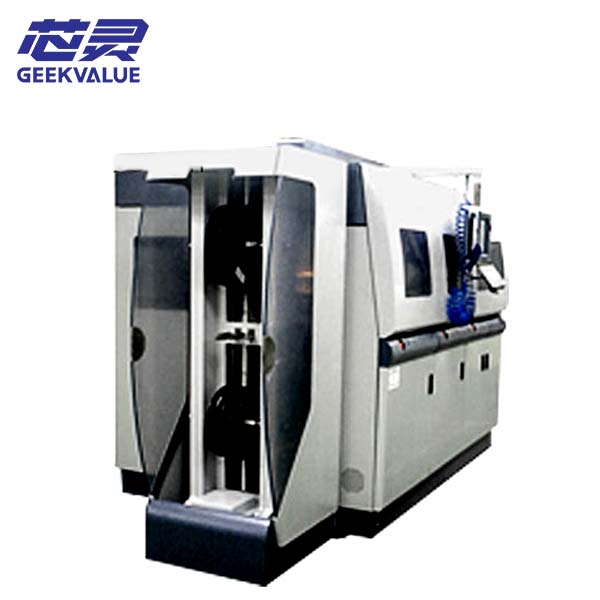
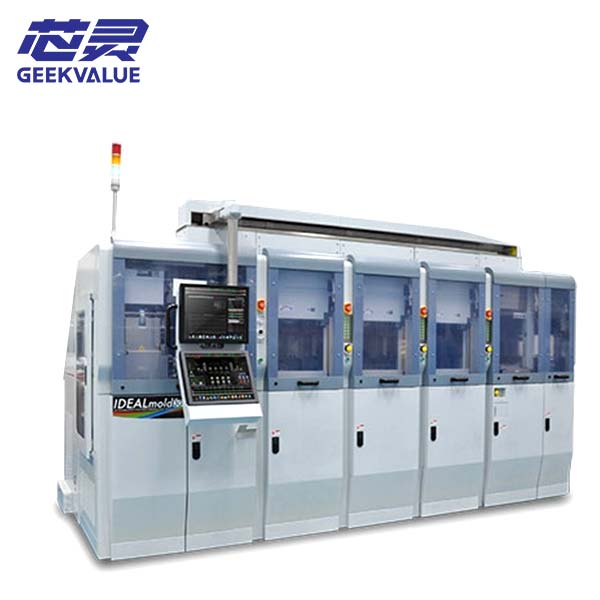
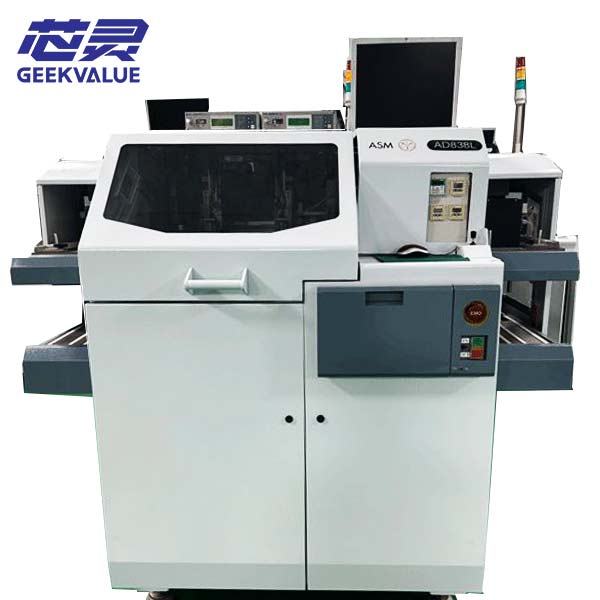
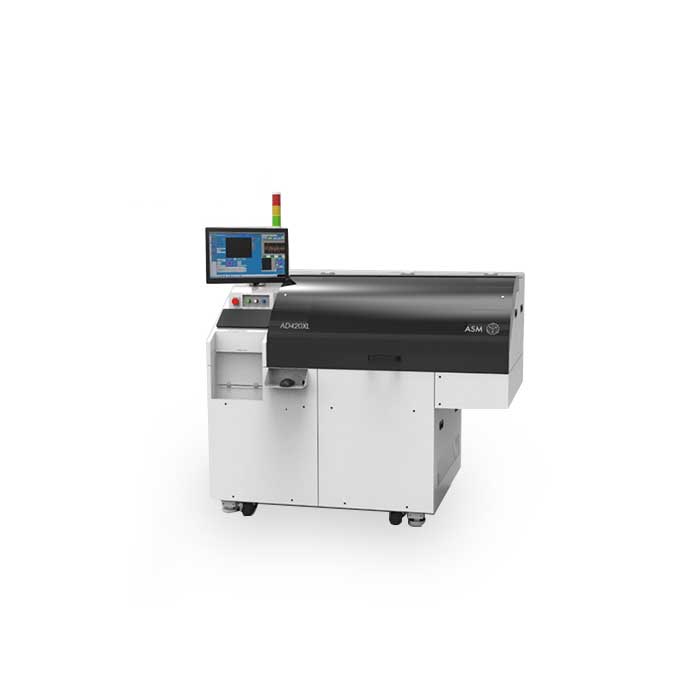
The ASMPT SUNBIRD is an integrated inspection, test and sorting system developed for wafer-level packages and compatible singulated semiconductor devices. The platform combines device handling with six-side inspection, sorting and optional individual-unit testing or laser marking, depending on the configuration of the specific machine.
For an initial inquiry, send clear photos of the package or die, your current inspection or test equipment model where applicable, and a short description of the required inspection, sorting or test process. Detailed product drawings and interface information can be reviewed later when necessary.
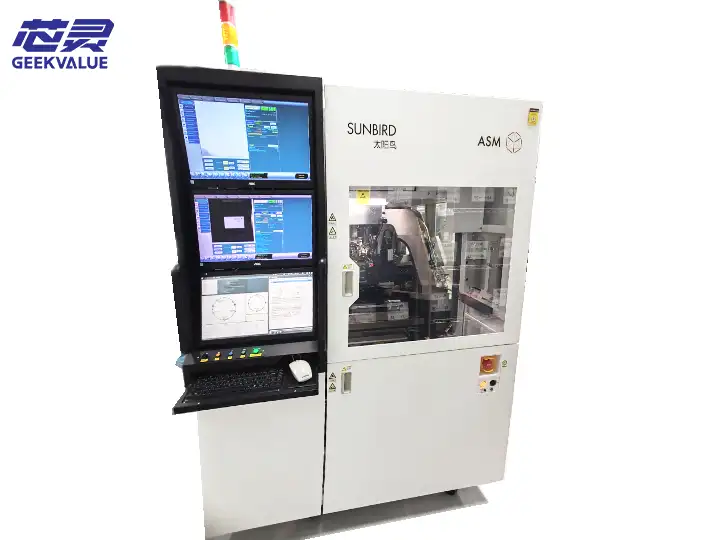
ASMPT SUNBIRD Machine Information
| Manufacturer | ASMPT |
|---|---|
| Model | SUNBIRD |
| Equipment Type | Wafer-level package inspection, test and sorting system |
| Primary Applications | Inspection and sorting of compatible wafer-level packages and singulated semiconductor devices |
| Inspection Capability | Six-side inspection and micro-crack detection according to the installed vision configuration |
| Sorting Method | Sorting according to inspection results and compatible upstream wafer-map data |
| Additional Functions | Individual-unit testing and laser marking when the required modules are installed |
| Condition | Pre-owned semiconductor inspection and test equipment |
| Actual Configuration | Confirmed according to the specific machine available |
| Delivery Scope | Based on the quotation and confirmed equipment list |
| Support | Initial fault review, component matching and repair discussion |
| Shipping | Export packing and worldwide delivery |
Inspection, Testing and Sorting in the WLP Process
The SUNBIRD is intended for the post-singulation handling of compatible wafer-level packages or individual devices. Products can be inspected for visible defects and sorted according to inspection results or wafer-map information generated during upstream production.
Depending on the installed modules, the machine may also perform individual-device testing and laser marking within the same handling flow. These functions should be confirmed from the actual machine rather than assumed from the SUNBIRD model name.
Product and Process Compatibility
A SUNBIRD system must be matched to the physical dimensions, shape, surface condition and handling requirements of the device. Compatibility may also depend on the input carrier, output format, vision recipe, wafer-map data, test interface and marking requirement.
Only basic information is needed for the first discussion:
- Clear photos of the wafer-level package, die or singulated device
- Photos of the current tray, carrier or other product-handling format
- Your current inspection or test equipment model where applicable
- A short description of the required inspection, sorting, testing or marking process
Detailed device dimensions, defect criteria, wafer-map format, electrical test requirements and marking data can be reviewed later when the available machine appears relevant to the project.
Six-Side Inspection and Wafer-Map Sorting
Six-side inspection allows the system to examine multiple surfaces of an individual package or die for visible defects such as cracks, chipping, contamination or surface damage. The exact detectable defect types and inspection limits depend on the installed cameras, lighting, optics, software and product recipe.
When compatible wafer-map data is available, inspection and sorting results can be connected with information generated during upstream processes. Before production use, the data format, device orientation, coordinate relationship and binning logic should be verified with sample products.
Individual-Unit Test and Laser Marking
The SUNBIRD platform was designed with flexibility for individual-device testing and laser marking, but these functions are not necessarily installed on every pre-owned machine. A usable test setup may require compatible contact tooling, test electronics, interfaces, software and product-specific fixtures.
Laser marking capability similarly depends on the installed marking module, product material, marking area and required code or identification format. Testing and marking modules should therefore be reviewed as part of the complete machine configuration.
Available SUNBIRD Configuration and Delivery Scope
Individual ASMPT SUNBIRD systems may differ in input and output handling, inspection cameras, lighting and optics, test modules, contact tooling, laser-marking equipment, wafer-map communication, sorting arrangements and software functions. Before purchase, the available machine should be reviewed to confirm whether its actual handling, inspection and test configuration is suitable for the intended device. The final delivery scope is based only on the quotation and confirmed equipment list; testers, contact fixtures, marking modules, trays, carriers, computers, software packages and external utility equipment are included only when specifically stated.
Receiving, Startup and Initial Sample Check
The SUNBIRD should be inspected and tested in stages before valuable production devices are introduced.
- Inspect the packing, machine cabinet, product-handling sections, vision components, control panel and safety guards.
- Photograph any impact marks, loose components, damaged cables or displaced assemblies before moving the equipment.
- Compare the received machine, trays, fixtures, test components and accessories with the confirmed delivery list.
- Check that cameras, lighting, handlers, contact components and marking equipment remain secured after transportation.
- Confirm the electrical supply, grounding, compressed air, vacuum, exhaust and other facility requirements of the actual machine.
- Start the controller and record all alarm messages before resetting the machine or changing recipes.
- Run the handling mechanisms without production devices and observe pickup, transfer, orientation and output movement.
- After basic operation is stable, use non-production samples to check inspection, sorting and any installed test or marking functions.
Several repeated samples should be used to confirm stable handling and consistent results. Stop testing if devices are damaged, orientation changes unexpectedly, inspection results are unstable or the same alarm repeatedly returns.
Inspection Results, Handling Faults and Parts Support
False rejects, missed defects or inconsistent inspection results may involve product presentation, lighting, focus, contamination, camera calibration, recipe settings or incorrect defect thresholds.
Handling faults may appear as pickup failures, device rotation, tray-position errors, transfer jams or damage to package surfaces. Test or marking problems may also involve contact tooling, external interfaces, alignment or product-specific settings.
Record the alarm message and the stage at which the problem occurs before resetting the machine. Photos of the product, carrier, inspection result and alarm screen, together with a short operating video where available, can provide a practical starting point for review.
Our team can assist with initial fault analysis, component identification, replacement-part matching and repair discussion. Related cameras, lighting components, sensors, motors, drivers, boards, cables, vacuum parts, handling assemblies and product fixtures can also be checked where available.
Frequently Asked Questions
Can the ASMPT SUNBIRD inspect our wafer-level package?
This depends on the device dimensions, shape, surfaces, defect criteria, handling format and vision configuration of the available machine. Send product and carrier photos for an initial review.
Does the SUNBIRD provide six-side inspection?
The SUNBIRD platform was developed for six-side inspection, including compatible micro-crack inspection applications. The cameras, optics, lighting and software installed on the available machine must still be confirmed.
Can the machine sort products using our wafer map?
The platform supports sorting according to compatible upstream wafer-map information. The file format, coordinates, orientation and binning logic should be checked before use.
Are individual-device testing and laser marking included?
These functions depend on the modules installed on the specific machine. Only test equipment, contact tooling and laser-marking components listed in the quotation are included.
Can you assist with inspection or handling alarms?
Yes. Send the machine model, alarm information, product and carrier photos and a short operating video where available. We can assist with initial fault review, parts matching and repair discussion.
Contact Us About the ASMPT SUNBIRD
Send product and carrier photos, your current inspection or test equipment model where applicable, and a short description of the required inspection, sorting, testing or marking process. We will review the basic application first and continue with the necessary machine configuration, vision, interface, replacement-parts or repair details afterward.