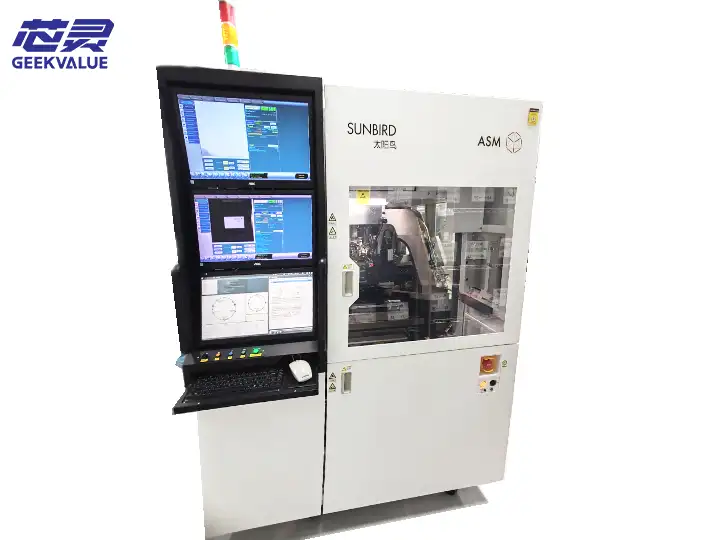
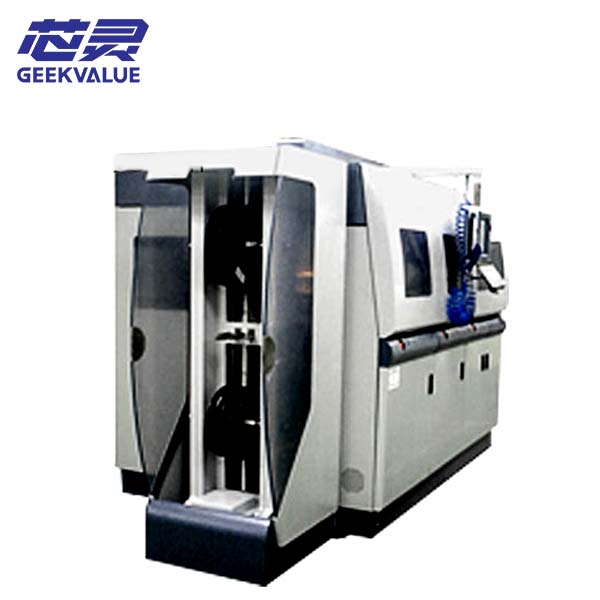
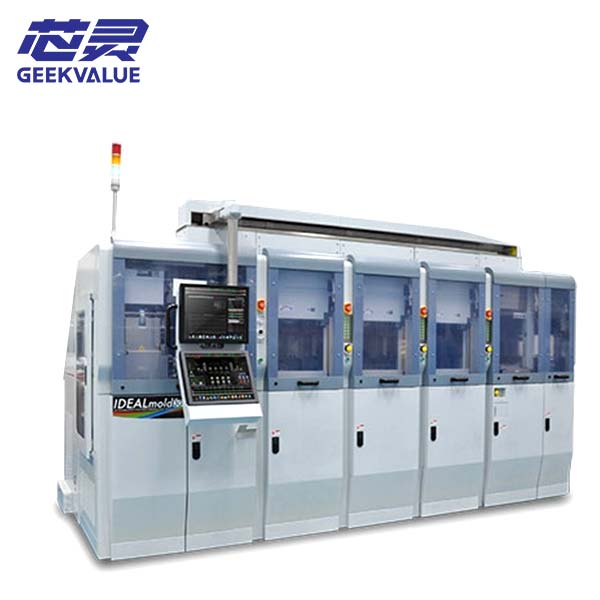
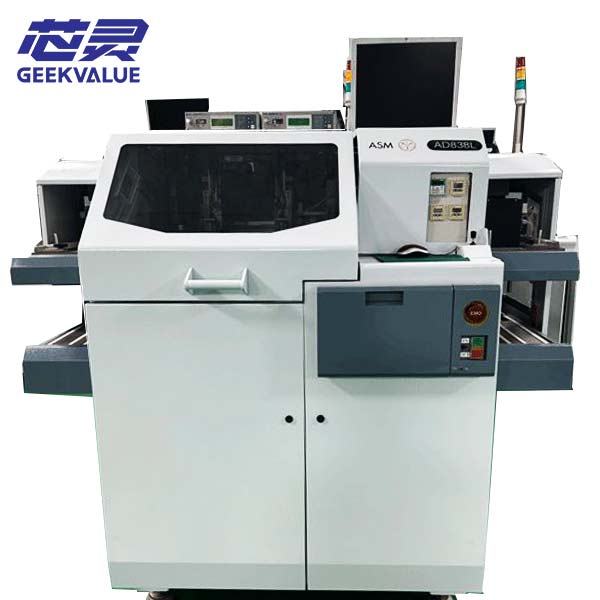
The ASMPT AD420XL is an automatic Mini LED die bonder developed for high-density LED chip placement in advanced display manufacturing. It is primarily associated with Mini LED COB production for LCD backlight units, local-dimming modules and fine-pitch RGB LED direct-view displays.
Rather than bonding complete OLED or LCD panel layers, the AD420XL handles the precision pick, alignment and placement of small LED dies onto a prepared substrate. The installed wafer handling system, bonding head, vision configuration, substrate transport, software version and previous production setup should all be checked before the machine is selected for a new manufacturing project.
Used, inspected and refurbished ASMPT AD420XL machines may be supplied according to current inventory. Contact our equipment team with your target LED dimensions, substrate format, production process and required configuration so that we can review machine suitability before quotation.
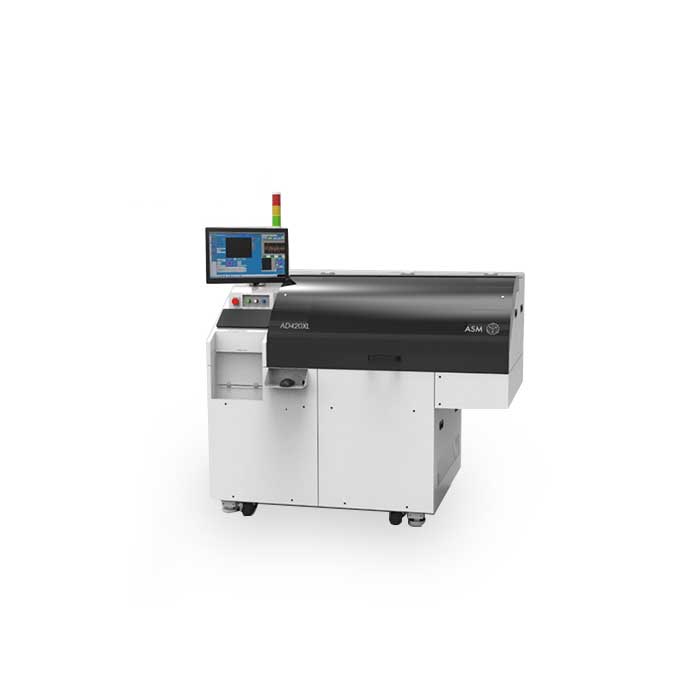
ASMPT AD420XL Equipment Overview
| Item | Equipment Information |
|---|---|
| Manufacturer | ASM / ASM Pacific Technology / ASMPT |
| Model | AD420XL |
| Equipment category | Automatic Mini LED die bonder and precision chip placement system |
| Primary process | Pick, align and place small LED dies onto a configured substrate |
| Main applications | Mini LED LCD backlight units, local-dimming modules and fine-pitch RGB LED displays |
| Production format | Inline or offline configuration, subject to the installed machine setup |
| Die handling | Small LED die handling capability; exact supported die dimensions must be confirmed |
| Substrate handling | Panel, PCB or other configured carrier formats; maximum dimensions depend on the installed transport system |
| Alignment | Machine-vision-assisted die and substrate positioning |
| Machine condition | Used, inspected or refurbished equipment may be available |
| Availability | Subject to current stock, machine year and installed configuration |
The information above describes the general positioning of the AD420XL platform. Final performance must be confirmed from the original equipment configuration, machine records, installed hardware and an application-based acceptance test.
What Is the ASMPT AD420XL Used For?
The ASMPT AD420XL is used in the die placement stage of Mini LED display and backlight production. During this process, individual LED dies are picked from a configured source, inspected or recognized by the vision system, aligned to the required coordinates and placed onto the target substrate.
Accurate chip position, orientation and placement consistency are particularly important in Mini LED manufacturing because a single backlight or display module can contain a very large number of closely spaced LED dies. Placement variation can affect the following production steps, electrical connection, optical uniformity, display appearance and final yield.
Mini LED LCD Backlight Units
In a Mini LED backlight production line, the AD420XL can be configured for placing LED dies onto substrates used in backlight modules. These modules divide the backlight into multiple controllable zones, supporting local dimming and improved brightness and contrast performance.
Machine selection should consider the LED die dimensions, substrate dimensions, placement pitch, substrate flatness, target output and the process used after placement.
Fine-Pitch RGB LED Displays
The AD420XL may also be applied to fine-pitch RGB LED direct-view display production. These applications require stable placement of red, green and blue LED dies according to the designed pixel arrangement.
Die position, rotation, height consistency and spacing can influence downstream joining, inspection, repair and final display uniformity. The actual machine configuration should therefore be reviewed against the specific RGB chip structure and module design.
High-Density LED Chip Placement
The platform is suitable for applications in which a large number of small LED dies must be placed repeatedly across a substrate. Its exact production capability depends on the bonding head, die presentation method, vision settings, placement distance, substrate handling method and production recipe.
Typical AD420XL Production Workflow
Material loading: The LED die source and target substrate are loaded into the configured handling system.
Recipe preparation: The operator selects or creates the production recipe according to the die, substrate and placement pattern.
Vision recognition: The vision system identifies die position, orientation and substrate reference marks.
Die pickup: The bonding head picks the selected LED die from the configured source carrier.
Alignment: Position and orientation are corrected according to the production recipe.
Placement: The die is placed onto the specified substrate coordinate.
Pattern completion: The machine repeats the sequence until the required placement area is completed.
Downstream processing: Inspection, electrical joining, reflow, curing or another process is performed according to the selected Mini LED manufacturing route.
The precise workflow is application-dependent. It should not be assumed that every used AD420XL machine includes the same wafer handler, substrate transport, bonding head, inspection functions or downstream interfaces.
Key Features of the ASMPT AD420XL
Precision Small-Die Handling
The machine is designed around the placement requirements of small LED dies. The supported die dimensions and thickness range depend on the installed pickup tooling, ejector configuration, vision system and original machine setup.
Vision-Assisted Alignment
Machine vision is used to locate and align the die and substrate before placement. When evaluating a used machine, camera condition, illumination, optics, calibration data and recognition stability should be inspected rather than judging the machine only by its external appearance.
High-Density Placement Support
Mini LED applications require repeated placement over dense patterns. Production performance is affected by placement pitch, travel distance, correction frequency, die quality, wafer-map strategy, substrate loading and process settings.
Backlight and RGB Display Flexibility
Depending on its installed configuration, the AD420XL may support production requirements for both Mini LED backlight modules and fine-pitch RGB display modules. A machine previously used for one application may require tooling, software, fixture or material-handling changes before it can be used for another.
Inline or Offline Production Options
Available equipment may be configured for offline operation or integration into a production line. Conveyor direction, loading height, substrate interface, communication protocol and upstream or downstream compatibility must be confirmed before line integration.
Important Configuration Items to Confirm
Two ASMPT AD420XL machines can have different capabilities even when their model names are identical. The following configuration items should be checked before purchase.
Machine manufacture year and serial number
Original production application
Bonding or placement head configuration
Pickup tooling and ejector configuration
Supported wafer or die-source format
Wafer frame and material loading system
Substrate size and transport configuration
Substrate loading and unloading direction
Vision camera, optics and illumination configuration
Available fiducial and alignment functions
Installed software version
Available production recipes and data
Inline or offline machine configuration
Machine interface and communication options
Electrical supply requirements
Compressed-air and vacuum requirements
Included accessories, fixtures and spare parts
Technical Data and Performance Confirmation
The exact speed, placement accuracy, supported die range and substrate capacity of an AD420XL should not be determined from the model name alone. These values may vary according to equipment configuration, production conditions, material quality and the acceptance-test method.
| Technical Item | Confirmation Requirement |
|---|---|
| Placement accuracy | Confirm through calibration records and an application-based placement test |
| Bonding or placement cycle | Confirm using the required pitch, travel distance, correction frequency and production recipe |
| Supported LED die dimensions | Confirm against the installed head, pickup tool, ejector and vision configuration |
| Supported die thickness | Confirm according to tooling and pickup conditions |
| Wafer or die-source format | Confirm the installed material presentation and wafer-frame system |
| Maximum substrate dimensions | Confirm the actual substrate handler, fixtures and transport system |
| Minimum placement pitch | Confirm with the specific die dimensions, substrate design and process test |
| Production output | Confirm with actual materials and the intended placement pattern |
| Inline compatibility | Confirm conveyor height, direction, interface and communication requirements |
| Utility requirements | Confirm from the machine nameplate and original equipment documentation |
For a used machine, we recommend treating verified test results and installed configuration as more important than specifications copied from a generic brochure or an unrelated equipment listing.
Pre-Shipment Inspection for a Used AD420XL
Before shipment, the inspection scope can be arranged according to the machine condition, available accessories and customer requirements. A typical inspection may include the following items.
Machine exterior and structural condition
Machine nameplate, model and serial-number verification
Power-on and system initialization
Computer, control system and software startup
Emergency stop and safety-interlock checks
X, Y, Z and rotational-axis movement checks
Bonding-head movement and mechanical condition
Pickup tooling and ejector inspection
Wafer or source-material handling test
Substrate loading, positioning and unloading test
Camera, lighting and vision-recognition checks
Fiducial recognition and alignment test
Vacuum and pneumatic-system inspection
Electrical cabinet and controller inspection
Alarm history and error-code review when available
Basic dry-cycle or material-based operation test
Included accessories and spare-parts inventory
The final test scope depends on whether customer materials, compatible substrates, tooling and an operational production recipe are available. A dry-cycle test does not replace a complete process acceptance test using the customer's actual LED die and substrate.
Used, Inspected and Refurbished Equipment Options
The condition of available AD420XL equipment may vary. Before quotation, we identify the machine status and specify what is included in the proposed supply scope.
Used Equipment
A used machine may be supplied in its existing configuration after basic condition inspection. This option is generally suitable when the customer has an experienced engineering team and plans to complete additional process setup or refurbishment internally.
Inspected Equipment
An inspected machine is evaluated according to an agreed checklist before shipment. Available results may include power-on condition, axis movement, vision status, handling functions and accessory verification.
Refurbished Equipment
Where refurbishment is available, the work scope may include cleaning, replacement of identified worn parts, functional adjustment, calibration support and additional operation testing. The exact refurbishment scope must be stated in the quotation rather than assumed from the word “refurbished.”
How to Evaluate an ASMPT AD420XL Before Purchase
Confirm the Original Application
Determine whether the machine was previously configured for LCD backlight, RGB display or another LED placement process. The original application provides important information about the installed tooling, software and material-handling setup.
Check the Complete Configuration
Request clear photographs or videos of the machine nameplate, bonding head, wafer or source handler, substrate transport, vision components, electrical cabinet, software interface and included accessories.
Define the New Production Requirement
Provide the LED dimensions, die thickness, source format, substrate dimensions, placement pitch, target output and production-line requirements. Without this information, it is not possible to determine whether an available machine can be adapted economically.
Review Tooling and Spare-Part Availability
A machine may power on normally but still require pickup tools, ejector components, fixtures, cameras, drives, cables or software support before production. These items should be reviewed before the purchase decision.
Agree on the Acceptance Standard
The quotation should state whether acceptance is based on power-on condition, dry cycling, standard-material testing or testing with the customer's actual die and substrate. Placement accuracy and production output should be linked to a defined test method.
Information Required for an Accurate Quotation
Send the following information when requesting an ASMPT AD420XL quotation:
Target application: LCD backlight, RGB display or another Mini LED product
LED die dimensions and thickness
Die source format and wafer-frame information
Substrate material and dimensions
Substrate thickness and flatness requirements
Placement pitch and placement pattern
Required positioning accuracy
Target production output
Inline or offline production requirement
Required conveyor direction and line height
Preferred machine year
Required inspection or refurbishment scope
Destination country and delivery terms
Installation, training and spare-parts requirements
If the complete process specification is not yet available, send a product drawing, LED data sheet, substrate drawing and a brief description of the intended production process. Our team can use this information to perform an initial equipment-matching review.
Export Packing and Delivery
Before export shipment, the machine can be prepared according to its size, structure and transportation method. Typical preparation may include:
Removal or secure fixing of sensitive movable assemblies
Protection of cameras, heads, monitors and control components
Moisture-resistant wrapping and protective film
Vacuum or barrier packaging where required
Shock-absorbing support and reinforced export wooden cases
Accessory labeling and separate parts inventory
Photographic records before case closure
Preparation for sea freight, air freight or local transport
Packing scope, shipping terms, insurance and destination handling requirements should be confirmed before dispatch.
Installation and Technical Support
Support can be arranged according to machine condition, destination and project requirements. Available service options may include:
Remote pre-installation preparation
Utility and site-condition review
Machine positioning and leveling guidance
Power-on and initialization support
Mechanical and vision calibration support
Material-handling verification
Basic recipe and operation guidance
Operator and maintenance training
Remote troubleshooting
Spare-parts identification and sourcing support
Process development and production acceptance depend on the availability of customer materials, tooling, software permissions and qualified process engineers. The service scope should be agreed before order confirmation.
Why Source the AD420XL Through SEMIMACHINE?
Configuration review: We check the actual machine setup instead of relying only on the model name.
Condition verification: Inspection scope can be defined according to the equipment condition and project requirements.
Application matching: Machine suitability is reviewed against the LED, substrate and production process.
Export preparation: Packing and delivery can be arranged for international equipment shipments.
Technical coordination: Installation, calibration, training and troubleshooting support can be discussed before purchase.
Related equipment support: We can also assist with other die bonder machines, handling systems and semiconductor packaging equipment.
Frequently Asked Questions About the ASMPT AD420XL
What is the ASMPT AD420XL used for?
The AD420XL is used for precision placement of small LED dies in Mini LED manufacturing. Typical applications include LCD backlight units, local-dimming backlight modules and fine-pitch RGB LED direct-view displays.
Is the AD420XL an OLED or LCD panel welding machine?
No. It should not be described as a general OLED panel welding, lamination or polarizer-bonding machine. It is a Mini LED die bonder and chip placement platform used to place individual LED dies onto a configured substrate. One of its applications is the production of Mini LED backlight modules used with LCD displays.
Can the AD420XL be used for both LCD backlights and RGB LED displays?
The platform is associated with both Mini LED backlight and fine-pitch RGB display applications. However, the actual capability of an individual machine depends on its bonding head, tooling, vision system, software, die-source handling and substrate configuration.
What placement accuracy does the AD420XL provide?
Placement accuracy should be confirmed from the specific machine configuration and through a defined acceptance test. Publicly circulated specifications may use different test conditions, so a generic value should not replace testing with the intended die, substrate and placement process.
What is the production speed of the AD420XL?
The actual cycle time and production output depend on die dimensions, placement pitch, travel distance, vision correction, material quality, handling time and the selected recipe. Confirm production speed through an application-based test whenever possible.
Is the machine available in inline and offline configurations?
Used AD420XL equipment may have different material-handling and line-integration configurations. Conveyor direction, line height, interfaces and communication requirements must be checked on the individual machine.
Can a used AD420XL be tested before shipment?
Yes. The available inspection scope may include power-on, initialization, axis movement, bonding-head operation, vision recognition, wafer handling, substrate transport, pneumatic systems and a dry-cycle or material-based operation test.
Can the AD420XL process my specific LED die and substrate?
Suitability can only be confirmed after reviewing the LED dimensions, die thickness, source format, substrate dimensions, placement pitch, required accuracy and production process. Tooling or configuration changes may be required.
What information should I provide when requesting a quotation?
Provide the application, LED die size, substrate dimensions, source format, placement pitch, target accuracy, required output, preferred machine year, destination and required inspection or installation support.
Do you provide installation and training?
Installation guidance, calibration coordination, operation training and remote technical support can be discussed according to the machine condition, destination and agreed service scope.
Request ASMPT AD420XL Availability and Configuration
Contact our equipment team to check current ASMPT AD420XL availability. Please include your LED die dimensions, substrate format, target application and production requirements so that we can review the machine configuration before quotation.