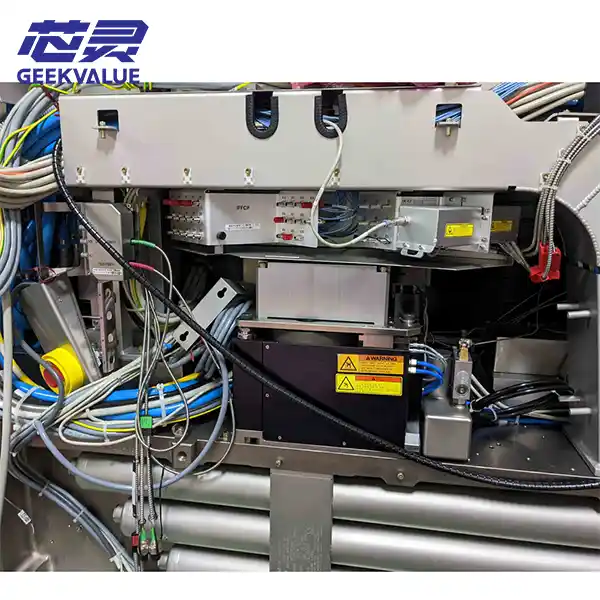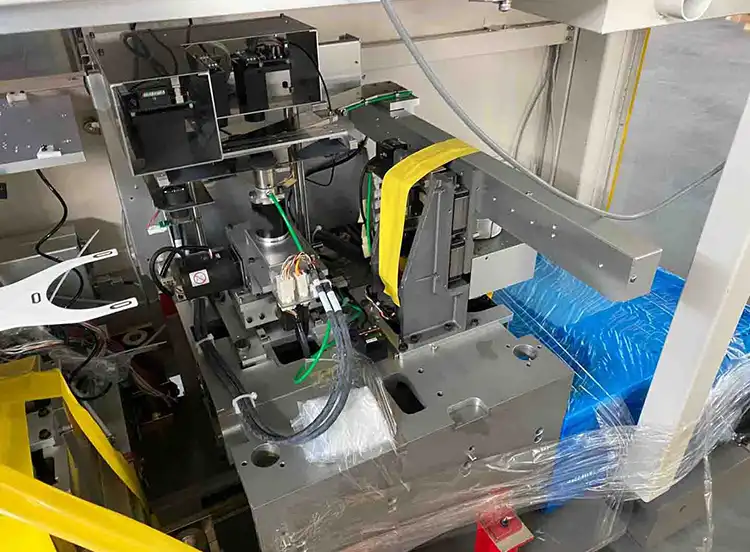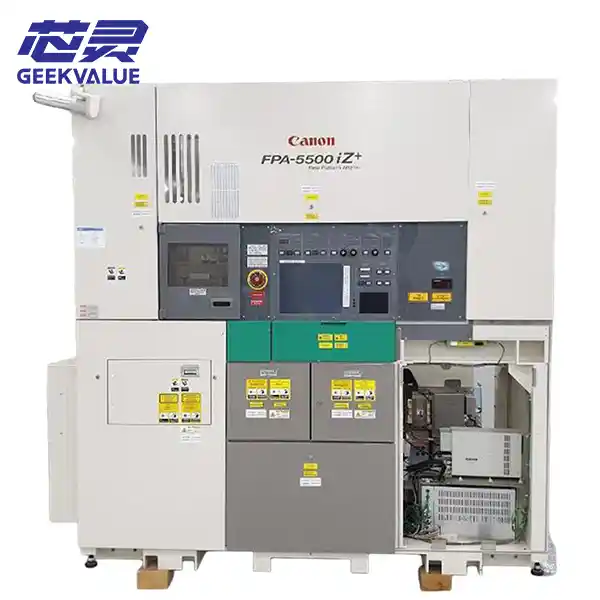
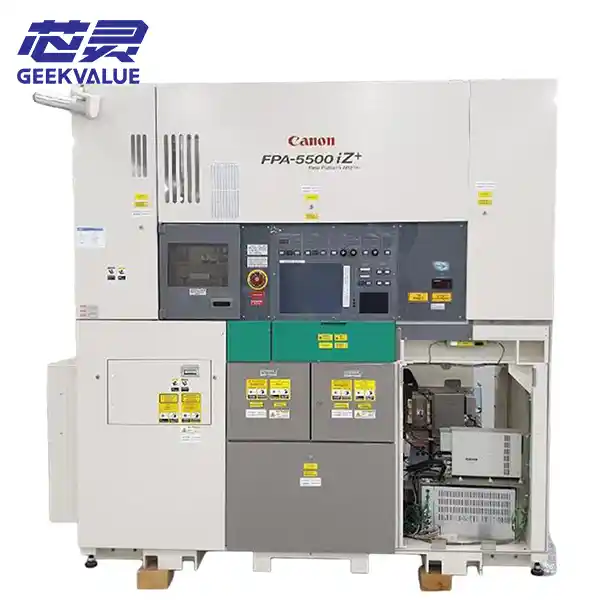
 The Canon FPA-5500IZ+ is an iconic 8-inch (200 mm) wafer i-line stepper lithography system, widely considered a "long-standing" player in mature semiconductor manufacturing processes. Below is a comprehensive and in-depth analysis of its core technologies, application scenarios, and operational and maintenance challenges:
1. Precise Positioning and Key Specifications
Process Node: Designed for the mature 0.35 micrometer (350 nanometer) process node; it was a flagship production model from the late 1990s to the early 2000s.
Optical Core: Employs a 365 nm wavelength i-line mercury lamp light source, combined with Canon's proprietary projection optics system; numerical aperture (NA) is approximately 0.57 to 0.60.
Performance Specifications: Resolution limit is 0.35 micrometers; exposure area size is approximately 22mm x 22mm; alignment accuracy is typically within ±0.08μm; throughput is approximately 60-80 wafers per hour (WPH), depending on process complexity.
2. System Architecture and Key Technical Characteristics
Step Scanning: Unlike earlier "step-repeat" systems (stepping lithography machines), this system employs simultaneous scanning of the mask and wafer. This achieves a larger effective exposure area while maintaining high resolution, making it more suitable for large-size chip designs.
Illumination System Optimization: Supports ring and off-axis illumination technologies, significantly improving depth of field (DOF). This offers a significant advantage when handling wafers with topographic variations (e.g., thick photoresist processes).
Alignment System: Employs advanced off-axis alignment (OAA) technology, combined with a laser interferometer control platform, effectively compensating for overlay errors caused by environmental drift.
3. Core Hardware Components (Maintenance Required)
Light Source Module: Equipped with a high-power ultra-high pressure (UHP) mercury lamp (approximately 2kW–5kW). This light source generates a large amount of heat, and the lamp life is only about 1500–2000 hours, resulting in extremely high power consumption and cooling costs.
Projection Lens (Lens Assembly): Composed of dozens of specially coated lens elements, it is the "heart" of the machine and also the most expensive component. It is extremely sensitive to temperature, humidity, and micro-vibrations; if the lens coating deteriorates due to moisture or mold growth, the repair cost will often exceed the residual value of the equipment.
Wafer Stage: Employs an air-floating guide rail design and relies on high-purity clean dry air (CDA) and a vacuum system. After prolonged operation, guide rail wear or laser interferometer mirror contamination will directly affect positioning accuracy.
4. Key Application Areas (Applicable Chips)
Focusing on high-reliability, long-life "core" chips, rather than pursuing advanced process nodes:
Power Semiconductors: IGBTs, MOSFETs, and SiC (Silicon Carbide) devices; requiring the ability to handle thick photoresist and step coverage;
Analog and Mixed-Signal Integrated Circuits: Power management chips and automotive electronic control chips;
MEMS and Sensors: Accelerometers, gyroscopes, and microfluidic chips (leveraging the excellent compatibility of i-series chips with thick photoresist);
CIS Image Sensors: Certain security or automotive-grade CIS with larger pixel sizes.
Environmental Challenges: Requires a high-precision constant-temperature cooling water circulation system, and the equipment temperature control must be stable within ±0.1°C; otherwise, overlay accuracy will immediately degrade.
In summary, while the FPA-5500IZ+ may no longer be a "newcomer," its exceptionally robust mechanical design and compatibility with wide-spectrum, thick-resist processes make it an irreplaceable workhorse for production volume across numerous domestic 6-inch and 8-inch lines—especially amidst the surging demand for third-generation semiconductors (such as SiC and IGBTs) and automotive electronics. If you are considering acquiring or maintaining this equipment, please prioritize the protection of the objective lens and the high-power cooling system above all else.