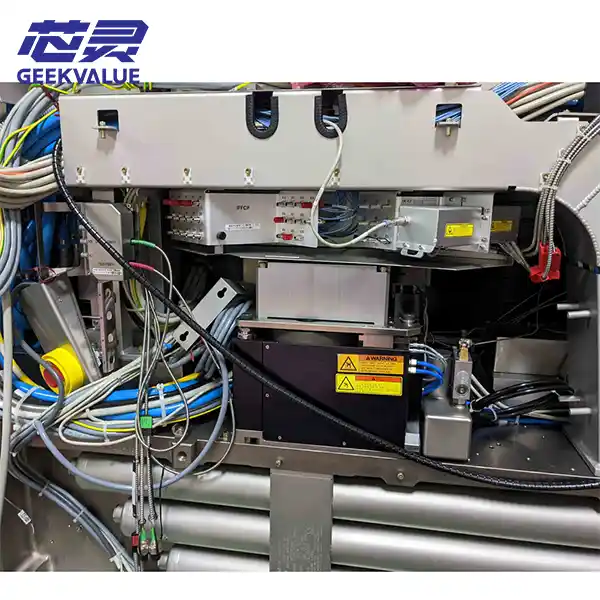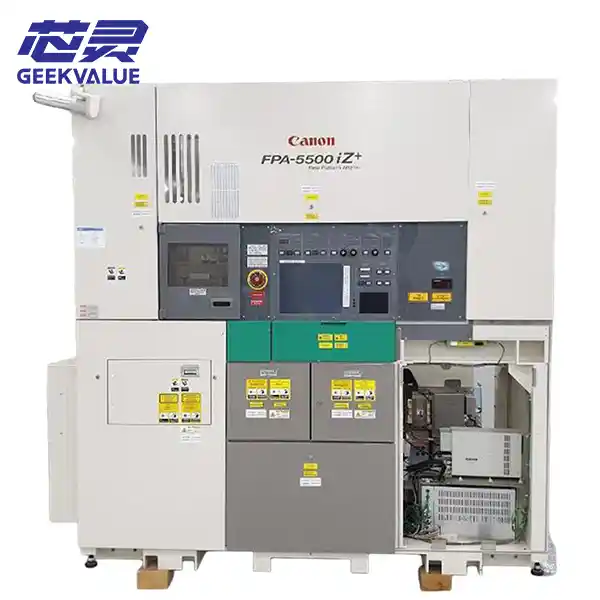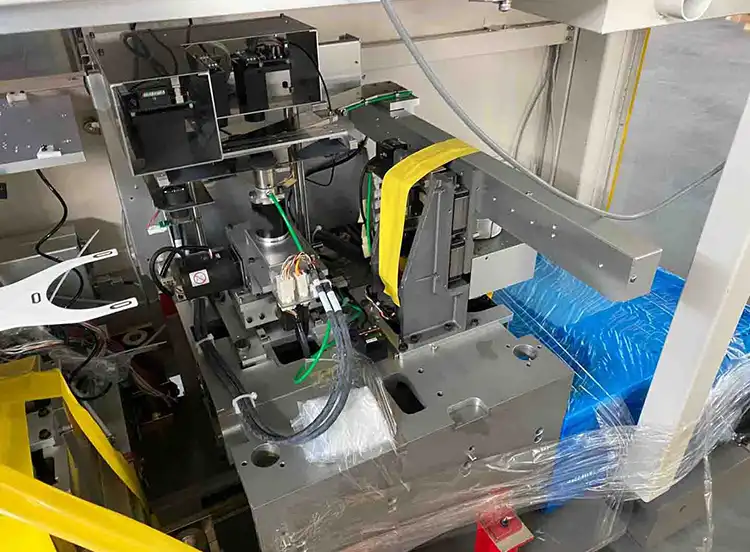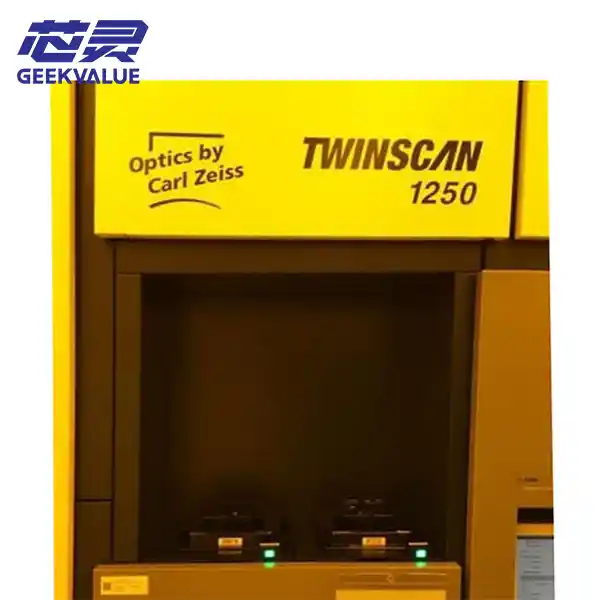
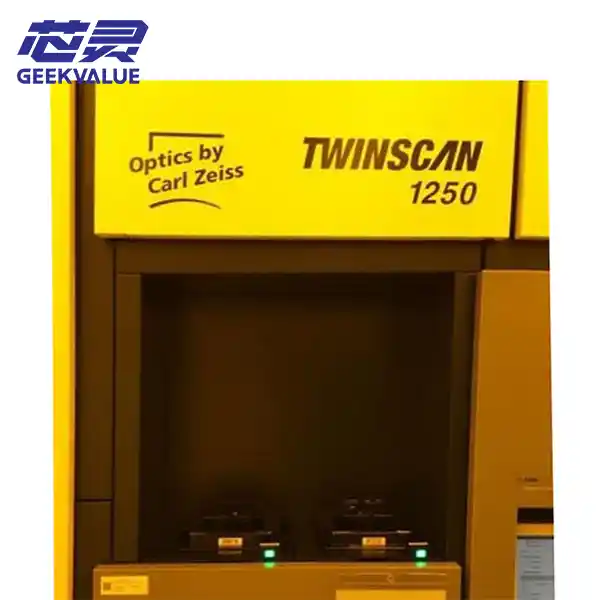
 The ASML XT 1250i is an 8-inch (200mm) KrF deep-ultraviolet (DUV) step-and-scan lithography system launched by the Dutch company ASML. It is precisely positioned for mature and mid-range volume production nodes ranging from 180nm to 120nm. As the successor to the earlier PAS series, it holds a highly significant position in the secondary market for 8-inch equipment.
The following is a comprehensive, in-depth analysis of this model:
1. Core Technical Specifications
Light Source System: Utilizes a 248nm wavelength KrF (krypton fluoride) excimer laser (typically supplied by Cymer or Light Machines); unlike mercury lamps, this system offers high energy concentration.
Optical Performance: The projection objective has a numerical aperture (NA) of approximately 0.75–0.80, achieving a limiting resolution of 120nm. The exposure field size is 26mm x 33mm, outperforming i-line models.
Production Efficiency: Throughput ranges from 80 to 100 wafers per hour (WPH), depending on the specific process layer.
2. Technological Generation and System Advantages (Compared to the older PAS series)
XT Platform Upgrade: Compared to the legacy PAS 5500 series, the XT 1250i features significantly improved stage rigidity and acceleration. It employs advanced laser interferometer control, resulting in faster positioning response times.
Alignment System: Equipped with ASML’s proven ATHENA (Advanced THrough-the-Lens Enhanced Alignment) technology, the system maintains stable overlay accuracy within ±25nm. It offers high tolerance for variations in wafer surface materials, making it particularly suitable for complex processes requiring multi-layer overlay.
Illumination Modes: Supports conventional, annular, and off-axis illumination (OAI), effectively optimizing the depth of focus to accommodate wafer surface topography. Essential "Three-Item Check" for Procurement: Before signing the contract, you must request and review: (1) Laser operating hours and gas consumption records (if the laser cavity suffers severe efficiency degradation, the replacement cost is approximately one-third of the entire machine's price); (2) Projection objective lens transmittance and wavefront inspection report (damaged lens coatings cannot be repaired; the entire lens barrel must be replaced); and (3) Laser interferometer linearity compensation data (which determines the positioning accuracy of the platform).
The cooling system is critical: Poor heat dissipation in the laser unit or the water-cooling circulation system (chiller) directly causes fluctuations in laser energy and triggers frequency mode-lock failures (resulting in "Laser Timeout" alarms). In such cases, do not immediately report a motherboard fault; instead, first clean the cooling system filter and replace the coolant.