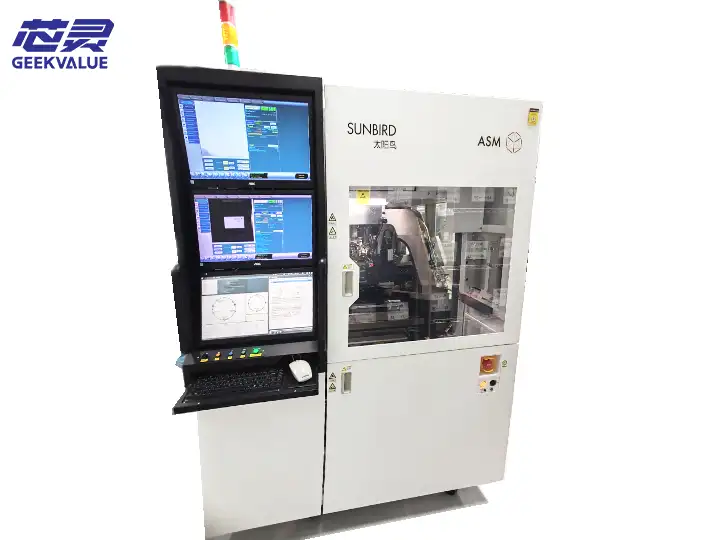
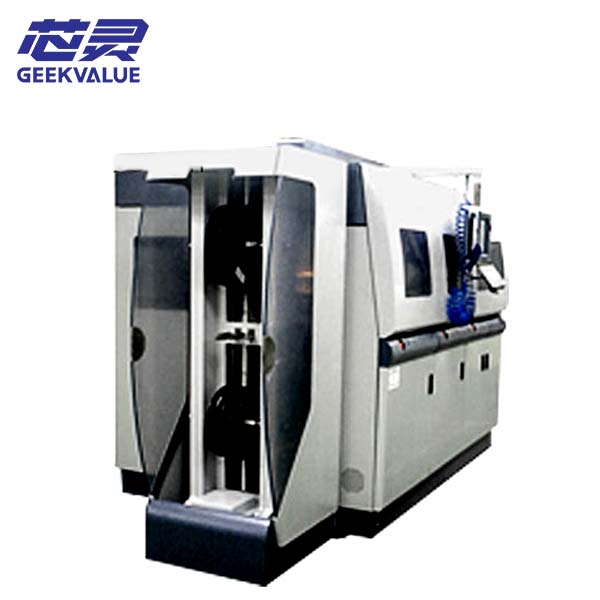
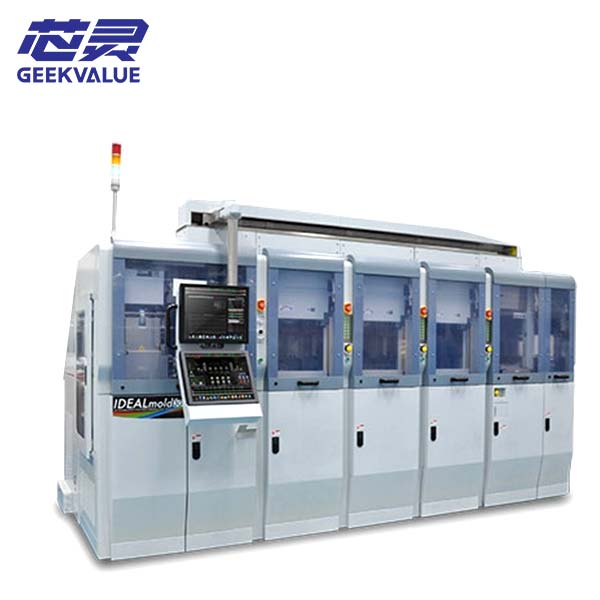
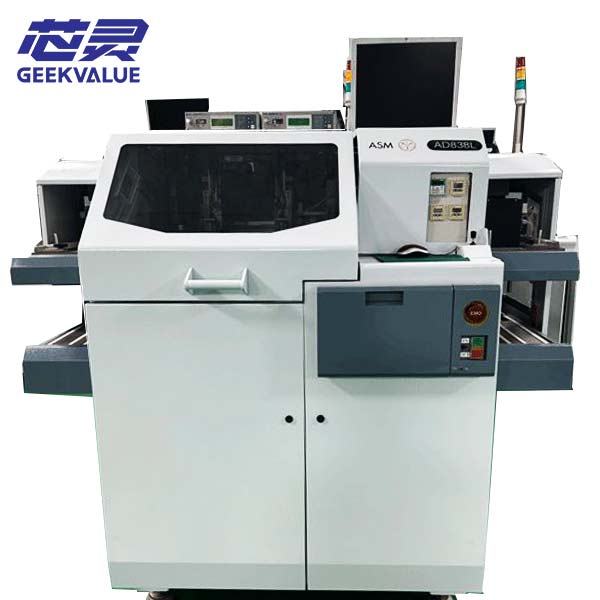
The ASMPT soft tin die bonding system is a fully automatic power semiconductor packaging platform that creates metallurgical solder joints between silicon dies and substrates using controlled reflow processes.
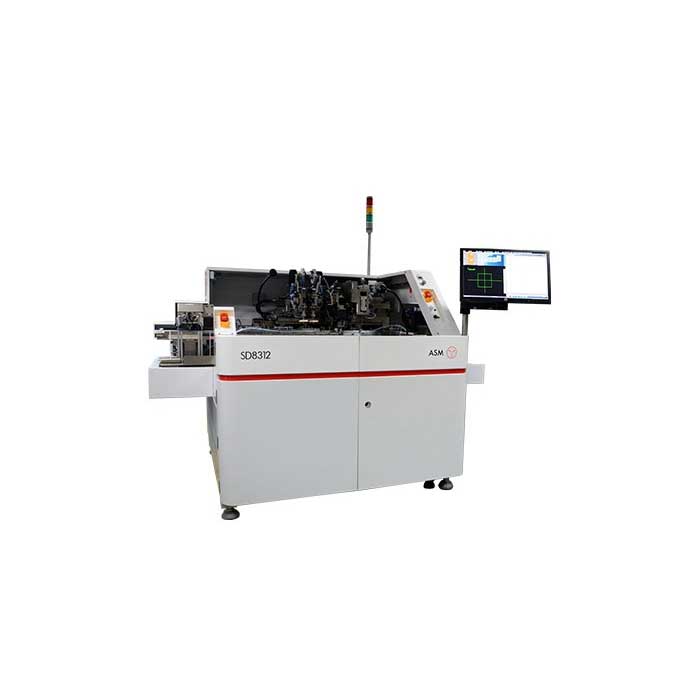
The Fully Automatic ASMPT Soft Tin Die Bonding Machine System is engineered for high-reliability power semiconductor packaging, specifically utilizing soft solder (tin) alloys to achieve superior thermal dissipation and electrical conductivity.
It is commonly evaluated by manufacturers producing IGBT power modules, high-power MOSFETs, and automotive-grade discrete devices where void-free die attach is critical for long-term device reliability.
What is ASMPT Soft Tin Die Bonding Used For?
The ASMPT soft tin die bonding system is used for attaching silicon power chips to substrates or leadframes using a molten tin-based solder process.
Unlike epoxy die attach, soft tin bonding creates a metallurgical interconnect that significantly reduces thermal resistance and improves power cycling durability.
It is primarily deployed in mass production environments for electric vehicle (EV) powertrains, industrial inverters, and high-frequency power supplies where devices operate under extreme thermal stress.
Industry Applications
The system is widely used in advanced power semiconductor manufacturing sectors:
Automotive Power Electronics
EV traction inverter IGBT modules
On-board charger (OBC) power devices
Automotive DC-DC converter modules
Industrial Power Systems
High-power industrial inverters
Servo motor drive modules
Wind and solar power conversion systems
Advanced Discrete Devices
High-current MOSFETs
Power factor correction (PFC) modules
Thermally critical high-density power packaging
Soft Tin Die Bonding in Power Semiconductor Packaging
Soft tin die bonding is a metallurgical packaging process used in power electronics manufacturing to form a low-thermal-resistance solder joint between silicon dies and metallic substrates.
This process improves heat dissipation efficiency and enables semiconductor devices to operate reliably under high current density and elevated temperature conditions.
Competitive Positioning in Die Bonding Equipment
The fully automatic ASMPT soft tin die bonder is positioned as a high-throughput metallurgical bonding solution for next-generation power semiconductor packaging.
It is widely adopted in production lines transitioning from epoxy die attach to advanced solder-based interconnect technologies.
Compared to epoxy die bonders: provides significantly higher thermal conductivity and lower junction temperature for power devices
Compared to manual or semi-automatic solder systems: ensures consistent void-free bonding with high repeatability in mass production
Compared to silver sintering systems: offers a cost-effective metallurgical bonding alternative using mature tin-based solder materials
Technical Capability Overview
Void-Free Soldering Control: Advanced pressure and atmosphere control systems minimize void formation, ensuring stable thermal performance.
Flux and Atmosphere Management: Integrated forming gas (N₂/H₂) environment ensures optimal wetting and solder joint integrity.
High-Temperature Process Stability: Mechanical structure designed to maintain alignment accuracy under continuous reflow thermal cycles.
Precision Placement Control: Ensures stable die positioning during molten solder phase to prevent shifting or misalignment.
Technical Specifications (Typical Configuration)
| Parameter | Description |
|---|---|
| System Type | Fully automatic soft tin die bonding system |
| Bonding Process | Soft solder reflow / metallurgical die attach |
| Void Level | < 5% (process and die size dependent) |
| Wafer Size Support | 8-inch / 12-inch (configuration dependent) |
| Atmosphere Control | N₂ / H₂ forming gas environment |
| Throughput | Optimized for high-volume power module production |
Why Manufacturers Use ASMPT Soft Tin Die Bonder
Ensures high-reliability thermal management for EV and industrial power electronics
Improves power cycling lifetime through reduced thermal resistance
Replaces manual soldering with automated high-repeatability production
Meets automotive-grade thermal reliability and void control requirements
Power Semiconductor Assembly Process Flow
Wafer dicing → Flux application → Die placement → Soft tin reflow (ASMPT system) → Plasma cleaning → Inspection → Wire bonding / top-side attach → Final testing
Frequently Asked Questions
What is ASMPT soft tin die bonding used for?
It is used for attaching power semiconductor devices such as IGBTs and MOSFETs to substrates using tin-based solder to achieve high thermal conductivity and reliable metallurgical bonding.
What are the advantages of soft tin bonding over epoxy die attach?
Soft tin bonding provides significantly better heat dissipation, lower thermal resistance, and higher reliability under high-power operating conditions compared to epoxy-based materials.
Is soft tin die bonding fully void-free?
No solder process is completely void-free, but this system is designed to achieve void levels typically below 5%, meeting automotive and industrial reliability standards.
Summary
The fully automatic ASMPT soft tin die bonding system is a critical solution for advanced power semiconductor packaging. It enables metallurgical die attach using tin-based solder, delivering superior thermal performance, high process stability, and automotive-grade reliability for EV and industrial power electronics.
Request Technical Specification or Quotation
For manufacturers evaluating advanced die attach equipment for power module production, detailed configuration options and process support information is available upon request.
Machine specification sheet
Process configuration options
Equipment availability and lead time
Production line integration support
Email / Inquiry Form Section