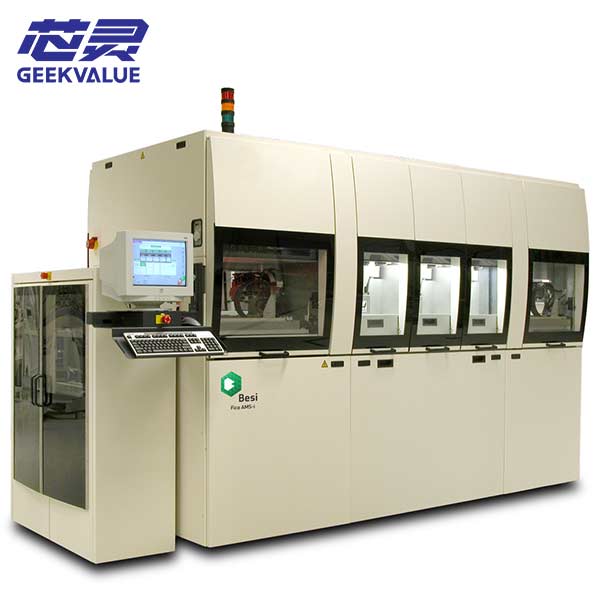
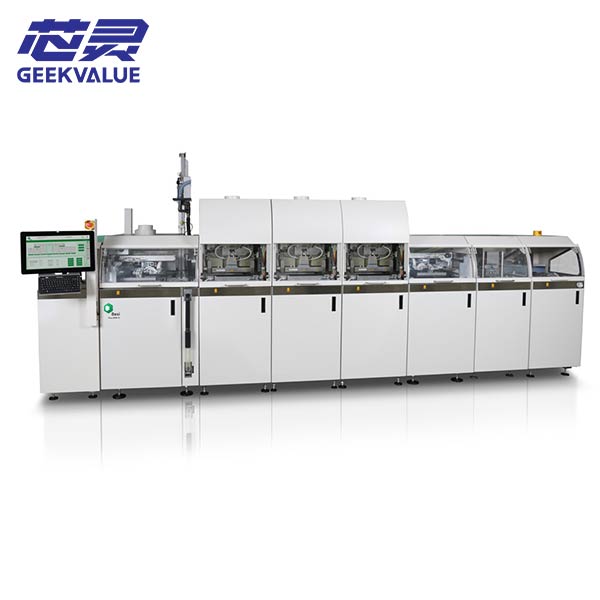
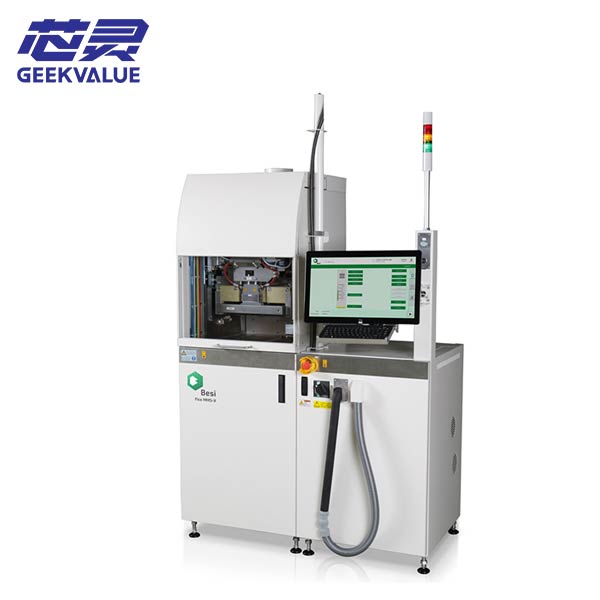
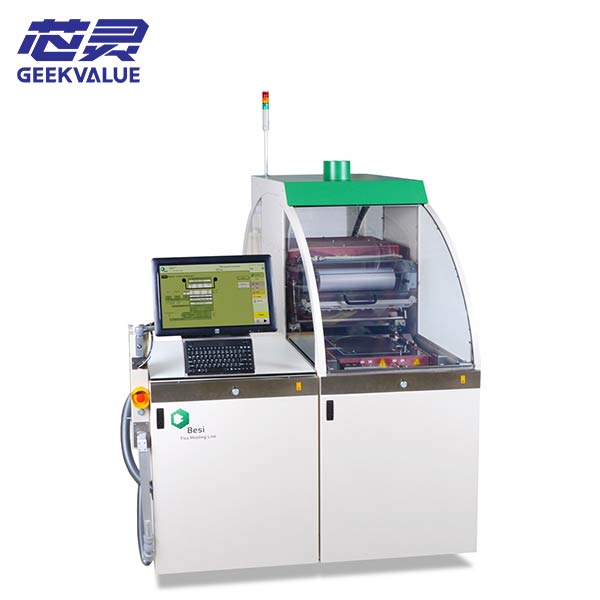
The Besi Fico Compact Line-X, also known as the FCL-X, is a modular trim and form system developed for high-density semiconductor leadframes. Depending on the installed configuration, the line may combine leadframe loading, trimming, forming, separation, marking and device sorting within one production setup.
The actual loaders, press modules, trim and form tools, inspection functions and output equipment must be confirmed from the specific pre-owned machine available. For an initial inquiry, send your current machine model, a package or leadframe photo and a brief description of the process you need.
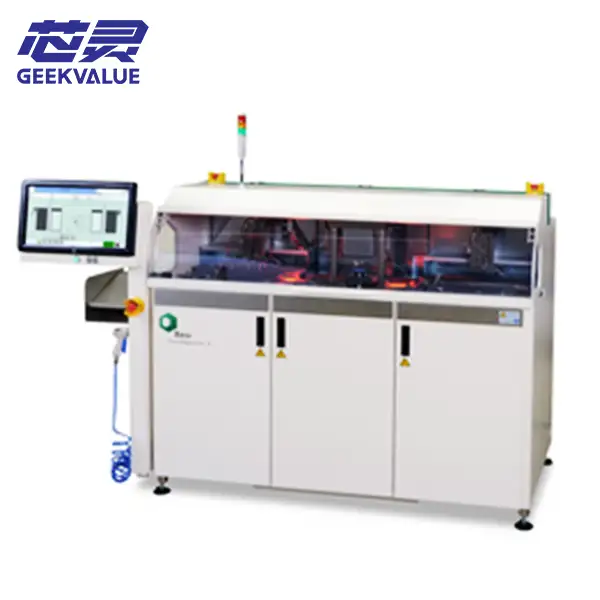
Besi Fico Compact Line-X Machine Information
| Manufacturer | Besi / Fico |
|---|---|
| Model | Fico Compact Line-X (FCL-X) |
| Equipment Type | Modular semiconductor trim and form system |
| Application | Processing of high-density semiconductor leadframes |
| Leadframe Length | 170–300 mm according to the manufacturer’s model specification |
| Leadframe Width | 18–125 mm according to the manufacturer’s model specification |
| Leadframe Thickness | 0.1–0.4 mm according to the manufacturer’s model specification |
| Package Thickness | Up to 5 mm according to the manufacturer’s model specification |
| Press Force | 50 kN |
| Maximum Speed | Up to 250 strokes per minute; practical output depends on the product, tool and line configuration |
| Machine Size | Width depends on configuration; model depth 950 mm and height 1,455 mm |
| Condition | Pre-owned semiconductor packaging equipment |
| Actual Configuration | Confirmed according to the specific machine available |
| Delivery Scope | Based on the quotation and confirmed equipment list |
| Shipping | Export packing and worldwide delivery |
FCL-X Process Range and Model Capabilities
The FCL-X was developed for high-density leadframes and applications with increasing accuracy and process-stability requirements. Its press system uses dedicated extraction and pollution-control features intended for demanding leadframe processing, including preplated and interdigit leadframes.
The platform can be assembled from different production modules. Besi lists the following modules for the FCL-X series:
- Dual Stack Magazine Handler
- Slotted Magazine Loader
- Control Unit
- Press Module
- Bulk Offloader
- Laser Marker
- Separator to Sorter
- Device Sorter
These are model-level options and modules. They should not be treated as installed or included until the configuration of the available machine has been confirmed. Besi also lists vision inspection, RFID tool recognition and SECS/GEM-related functions, but their presence depends on the specific line configuration. :contentReference[oaicite:1]{index=1}
Product and Tooling Compatibility
The general FCL-X processing range does not by itself confirm that the available machine can run a particular product. Compatibility depends heavily on the installed trim and form tool, leadframe layout, package design, required lead geometry and output method.
For the first inquiry, provide only the basic information needed to understand the project:
- Your current machine model, if the FCL-X will replace existing equipment
- A clear photo of the package, strip or leadframe
- A short explanation of the trimming, forming, separation or sorting process required
- A photo of the existing tool or finished product where available
Detailed package drawings, lead dimensions and tooling data can be discussed later when the available machine appears relevant to the process.
Available Configuration and Delivery Scope
Every FCL-X line can be configured around a particular product. A pre-owned machine may therefore contain a different combination of loaders, press modules, inspection units, marking systems and output equipment from another FCL-X line.
The actual machine modules, installed tools and supplied accessories will be confirmed according to the specific unit available. Only items listed in the quotation or confirmed delivery list are included.
Trim and form tools, magazines, trays, tubes, laser-marking equipment, sorting modules, computers and external production equipment should not be assumed to be included unless they are specifically stated.
Receiving and Initial Machine Inspection
Complete a basic receiving inspection before the FCL-X is installed or powered on.
- Inspect the packing, machine frames, control unit, press modules, covers and visible transport mechanisms.
- Photograph impact marks, loose components, damaged cables or shifted assemblies before moving the equipment.
- Compare the delivered modules, tools and accessories with the confirmed delivery list.
- Check whether the installed trim and form tools remain secured after transportation.
- Confirm the required electrical supply, grounding and compressed-air conditions from the actual machine configuration.
Transport damage or missing items should be recorded before installation, modification or power-on.
Startup and Dry-Cycle Testing
The first startup should confirm the basic condition of the installed modules before production leadframes are introduced.
- Start the control system and record all alarm messages before resetting the equipment or changing parameters.
- Confirm that the installed modules complete initialization and return to their correct starting positions.
- Run a dry cycle without loading production strips or devices.
- Observe the loader, leadframe transport, press movement, sensors and output modules throughout the cycle.
- Check for abnormal noise, unstable movement, mechanical interference, air leakage or repeated alarms.
- Stop the test if the press, tool or transport mechanism does not operate normally.
Press-area inspection and tool adjustment should only be carried out after the machine has been made safe by qualified personnel.
Leadframe and Tooling Trial
After the dry cycle is stable, use suitable non-production leadframes or samples that match the installed tool.
- Confirm the leadframe type, orientation and loading position before starting the cycle.
- Observe strip feeding, centering and transfer into the press tool.
- Check whether trimming, forming and separation occur at the intended positions.
- Inspect the processed parts for incomplete cuts, burrs, lead deformation, cracks, scratches or package damage.
- Where marking or sorting modules are installed, confirm that products reach the correct downstream position.
- Repeat several cycles to identify intermittent feeding, tooling, sensor or output problems.
One successful press cycle is not enough to confirm production readiness. The full loading, pressing and output process should remain stable without recurring alarms, jams or inconsistent results.
Process Problems and Fault Review
Incomplete trimming, inconsistent lead forming, strip jams or repeated alarms may involve the leadframe, installed tool, press setup, transport mechanism, sensors, pneumatic system or machine parameters.
Stop operation if products are being damaged, the tool does not close correctly, transport parts interfere or the same alarm repeatedly returns. Record the alarm message, affected module and operating stage before resetting the machine.
Photos of the product, leadframe, installed tool and alarm screen are useful for an initial review. A short video of the failed cycle can also help identify intermittent feeding, pressing or output problems.
Tooling, Repair and Replacement Parts Support
Trim and form performance depends strongly on the condition and suitability of the installed tool. Worn cutting components, incorrect tool setup or a tool designed for another leadframe may affect cut quality, lead position and production stability.
Send the machine model, product or leadframe photo, tool photos, alarm information and a short description of the problem. Our team can assist with an initial fault review, tooling comparison and replacement-part matching.
Related support may involve trim and form tools, wear parts, sensors, motors, drivers, boards, cables, pneumatic components and transport assemblies where available. The appropriate next step depends on the actual machine configuration and identified fault.
Frequently Asked Questions
Can the Fico Compact Line-X process our semiconductor package?
This depends on the leadframe, package design, required result and tool installed on the available machine. Send a product or leadframe photo for an initial review.
What is the difference between the FCL-X model range and the available machine?
The model range describes the platform’s possible modules and processing limits. The available used machine may include only part of that configuration, so its installed modules and tools must be confirmed separately.
Is a trim and form tool included with the machine?
Only tools specifically listed in the quotation or confirmed delivery scope are included. Any supplied tool may also have been designed for a particular leadframe.
Which loader and output modules are installed?
The FCL-X supports several loading and offloading arrangements. The actual modules on the available machine will be confirmed according to the specific unit.
Can you assist if the machine has an alarm or trim and form problem?
Yes. Send the machine model, alarm information, product and tool photos, and an operating video where available. We can assist with initial fault review, parts matching and repair discussion.
Contact Us About the Fico Compact Line-X
Send your current machine model, a package or leadframe photo and a short description of the required process or equipment problem. We will review the basic information first and continue with the necessary machine, tooling, replacement-parts or repair details afterward.