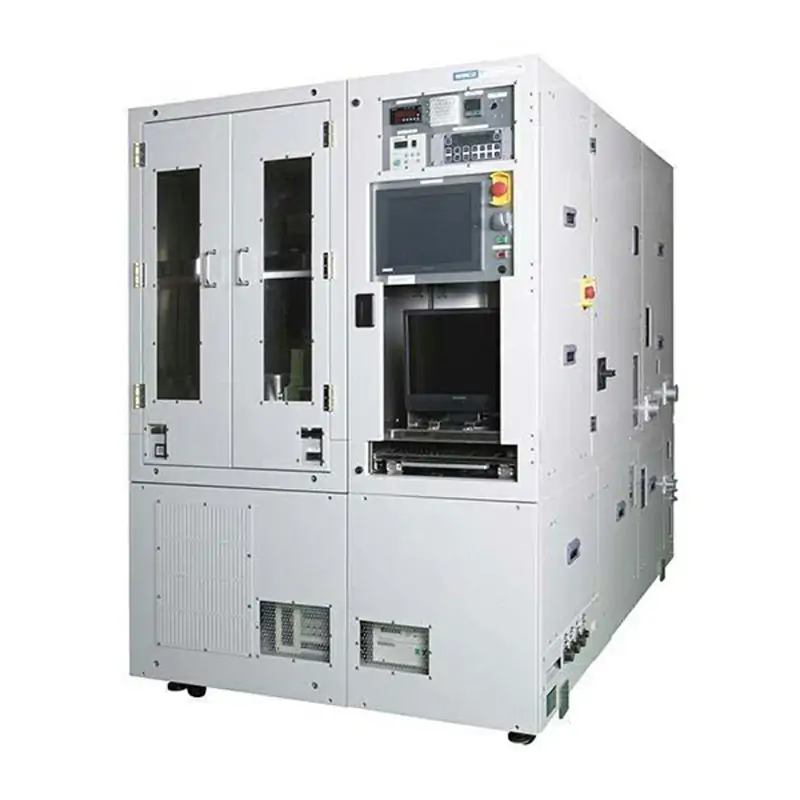
The SAMCO AD-230LP is a load-lock plasma-enhanced atomic layer deposition system developed for precise and conformal thin-film formation. It alternately introduces precursor and reactant gases so that film growth is controlled by self-limiting surface reactions.
The system combines atomic-level film control with a capacitively coupled plasma source. Typical published processes include nitride films such as AlN and SiN, as well as low-temperature oxide films including AlOx and SiO2. The actual precursor configuration, plasma source condition and available recipes must be confirmed for the individual used machine.
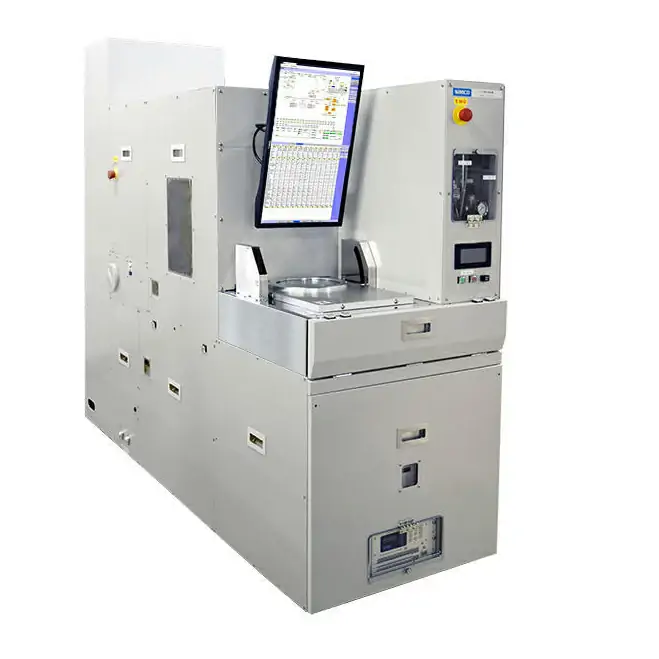
SAMCO AD-230LP Main Specifications
| Manufacturer | SAMCO |
|---|---|
| Model | AD-230LP |
| Equipment Type | Load-Lock Plasma-Enhanced Atomic Layer Deposition System |
| Deposition Technology | Plasma-enhanced atomic layer deposition |
| Plasma Method | Capacitively coupled plasma in the published platform design |
| Wafer Loading | Load-lock chamber |
| Published Film Materials | AlN, SiN, AlOx and SiO2 |
| Film Control | Atomic-layer-level thickness control through sequential surface reactions |
| Primary Applications | Insulating films, passivation films and conformal coating of three-dimensional structures |
| Condition | Used semiconductor equipment |
| Availability | Subject to current stock, inspection and configuration confirmation |
Key Equipment Features
Load-lock design that avoids routinely opening the process chamber to atmosphere
Atomic-layer-level film thickness control
Conformal deposition on high-aspect-ratio structures
Capacitively coupled plasma for plasma-assisted ALD processing
Optimized gas flow and compact chamber design for shorter purge cycles
Suitable for oxide and nitride thin-film development
Typical Applications
The AD-230LP may be used to form gate-insulating layers, device passivation films, optical or laser-facet coatings and conformal films on MEMS and other three-dimensional structures. Published material examples include AlN, SiN, AlOx and SiO2.
Actual compatibility depends on the installed precursor delivery system, plasma source, chamber materials, substrate holder, process temperature range and available recipes. A published material capability should not be treated as proof that the available used machine includes the required precursor hardware.
Used Equipment Configuration and Inspection
Before quotation, customers should confirm the machine serial number, process chamber condition, load-lock operation, plasma generator, matching components, precursor lines, MFC ranges, valves, vacuum pumps, substrate holder and control software.
The exact film materials previously processed in the chamber should also be reviewed because chamber history and precursor contamination may affect whether the system is suitable for a new ALD process.
Request SAMCO AD-230LP Information
Contact our team to check the current availability of the used SAMCO AD-230LP. Please provide your substrate size, target film, precursor requirements, expected thickness range, destination country and installation schedule.
Contact us for current machine photos, installed precursor configuration, chamber history, inspection status and quotation.
Frequently Asked Questions
Is the AD-230LP a thermal or plasma ALD system?
The AD-230LP is a plasma-enhanced ALD system. The published platform uses capacitively coupled plasma to support plasma-assisted surface reactions.
What films can the AD-230LP deposit?
Published applications include AlN, SiN, AlOx and SiO2. The available machine must have the correct precursor lines, reactant gases and qualified recipes for the required film.
Why does the system use a load-lock chamber?
The load lock allows substrates to be transferred without opening the process chamber directly to atmosphere, supporting cleaner and more repeatable deposition conditions.
Can the AD-230LP coat three-dimensional structures?
ALD is suited to conformal coating of high-aspect-ratio and three-dimensional structures. Actual coverage depends on the material chemistry, process conditions and geometry of the component.